
Mini Golf Cart
Our Collection / Mini Golf Cart
Featured Products
Browse hand-picked products from this collection.
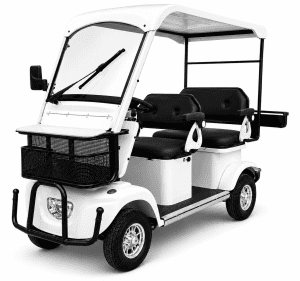
2000W / 72V 20AH – S11 Mini Electric Golf Cart
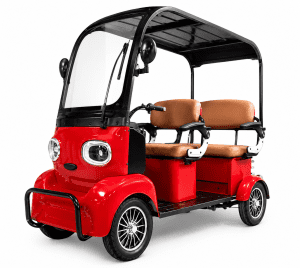
2000W / 72V 20AH – Panda Electric Golf Cart
Mini golf carts combine a compact four-wheel chassis with an electric motor, rechargeable battery, steering system, seating, and rider controls for short-distance electric transport. Their smaller footprint separates them from full-size golf carts, while the low, four-wheel platform provides a different driving position and handling profile from electric bikes, scooters, or go-karts.
The current CarZoneToys Mini Golf Cart collection centers on two electric models: the 2000W / 72V 20Ah S11 Mini Electric Golf Cart and the 2000W / 72V 20Ah Panda Electric Golf Cart. Both use a high-voltage 72V battery platform with 2000W motor output, but their cabin design and equipment create different use cases.
The S11 places more emphasis on performance information, with a stated top speed of up to 30 mph, an advertised range of up to 30 miles, digital display, and Bluetooth system. The Panda uses a compact steel frame with a two-seat layout and protective roof.
Motor output and voltage should not be considered alone. Battery capacity, passenger load, controller tuning, tires, braking, surface conditions, vehicle weight, and driving speed all affect how a mini electric golf cart performs.
Compact Four-Wheel Chassis and Steering Architecture
A mini electric golf cart uses four wheels positioned around a compact chassis, with the front wheels controlling direction and the rear section supporting much of the drivetrain and passenger load. This configuration creates a stable footprint when stopped and allows the rider to operate the vehicle through a steering wheel rather than handlebars.
Wheelbase has a direct effect on maneuverability. A shorter chassis can require less room to change direction than a full-size cart, which makes compact dimensions useful where parking, storage, or pathway width is limited. The exact turning radius still depends on steering angle, wheel placement, tire size, and frame geometry.
Weight distribution matters as well. Batteries are among the heaviest components in an electric cart, so their location influences the center of gravity. Passenger position, motor placement, and chassis design then determine how the cart reacts during acceleration, braking, and cornering.
The Panda’s compact steel-frame construction makes chassis structure one of its defining attributes. A steel frame provides the base for the seats, roof structure, electrical system, steering assembly, and running gear.
Compact does not mean lightweight enough to handle like a toy ride-on. A 72V, 2000W vehicle should be treated according to its actual dimensions, weight, controls, and performance specifications.
| Chassis Factor | Mechanical Role | Buying Impact |
|---|---|---|
| Four-wheel layout | Supports vehicle on four contact points | Stable low-speed platform |
| Wheelbase | Sets front-to-rear axle spacing | Affects maneuverability |
| Steering geometry | Controls front-wheel angle | Determines turning response |
| Steel frame | Supports passengers and drivetrain | Provides structural base |
| Battery placement | Adds concentrated vehicle mass | Influences balance |
| Seating position | Locates rider load | Affects handling and control |
72V Electrical Platform and 2000W Motor Output
Both current CarZoneToys mini golf carts use a 72V electrical architecture with 2000W motor output. This combination places the collection well above small kids’ ride-on vehicles in available electrical power.
The battery supplies stored energy to the motor controller. The controller regulates current in response to accelerator input, and the electric motor converts that energy into rotational force that moves the vehicle.
Voltage and wattage describe different parts of this process. The 72V specification defines the operating voltage of the electrical system. The 2000W figure describes rated motor power. Neither figure tells buyers the complete story about speed, range, or load performance.
Controller programming can limit or shape acceleration even when two vehicles use the same motor rating. Wheel diameter and gearing affect how motor rotation becomes road speed. Passenger weight changes the force required to accelerate, while hills increase motor demand.
This is why the S11 and Panda can share the same basic 72V/2000W architecture but still need to be compared as separate vehicles.
A higher-output motor system also makes braking and rider control more important. Available acceleration needs to be matched by suitable stopping hardware, predictable throttle response, tires with adequate grip, and a chassis designed for the vehicle’s intended load.
72V 20Ah Battery Capacity, Range, and Energy Use
Both current models use a 72V 20Ah battery specification, which gives buyers more useful information than voltage alone.
Amp-hours describe battery capacity, while voltage identifies the electrical platform. Together, these figures provide a better picture of available stored energy. Even then, actual travel distance depends on how quickly that energy is used.
The S11 is currently advertised with a range of up to 30 miles. That figure should be treated as a model-specific stated range rather than a guaranteed distance under every condition.
Passenger load has a direct effect on energy demand. A cart carrying more weight requires additional motor output during acceleration and climbing. Hills, soft ground, low tire pressure, repeated stopping and starting, and sustained higher speeds can also reduce range.
Driving style matters particularly on a vehicle capable of higher speeds. Maintaining a moderate, steady pace normally creates different battery demand from repeated full acceleration.
Battery age introduces another variable. Rechargeable batteries gradually lose usable capacity as they accumulate charge cycles. A cart that originally covers a certain route may provide less range later in its service life even when fully charged.
Charging should always use the battery-compatible charger supplied or approved for the model. Replacement batteries need to match voltage, capacity requirements, chemistry, connector arrangement, dimensions, and controller compatibility.
| Energy Factor | What It Controls | What to Compare |
|---|---|---|
| 72V system | Electrical operating class | Must match controller and motor |
| 20Ah capacity | Available stored charge | Compare model battery specification |
| Passenger weight | Motor workload | Stay within rated capacity |
| Driving speed | Energy consumption | Higher speed can reduce range |
| Terrain | Rolling and gradient resistance | Hills require more power |
| Tire pressure | Rolling resistance | Maintain specified pressure |
Seating Capacity, Passenger Load, and Cabin Design
Passenger configuration changes how a mini golf cart should be evaluated. The Panda Electric Golf Cart is specifically presented with a two-seater layout, making passenger capacity one of the strongest model entities in this collection.
Two seats create more than extra room. Carrying a second rider adds weight to the chassis, increases motor demand during acceleration, and places more load on the braking system. Suspension and tire loads also change as passenger weight increases.
The manufacturer’s stated maximum load should therefore control how the cart is used. Seat width or available physical space should not be used to estimate passenger capacity.
The Panda also includes a protective roof. A roof can provide shade and limited overhead coverage, but it should not be treated as a complete weather enclosure or rollover-protection structure unless the manufacturer specifically certifies it for those functions.
Cabin access matters for regular use. Seat height, steering-wheel position, legroom, pedal reach, and entry width determine whether the driver can operate the cart without stretching or changing posture.
The driver should be able to reach the accelerator and brake controls while remaining fully seated. Passenger seating should similarly keep occupants inside the intended seating area rather than requiring them to shift outward for comfort.
Speed, Braking, Tires, and Surface Control
The S11 is currently listed with a top speed of up to 30 mph, which makes speed management a much more important topic than it would be on a small recreational ride-on.
Higher speed increases stopping distance and raises the consequences of poor tire grip, sharp steering input, uneven surfaces, or excessive passenger load. A compact wheelbase can support maneuverability, but abrupt direction changes become less appropriate as speed rises.
Braking hardware therefore needs to match the vehicle’s actual performance. The exact brake configuration should be confirmed on each product record rather than assumed from motor wattage or body design.
Tires provide the only contact between the cart and the surface. Correct tire pressure, tread condition, wheel alignment, and appropriate surface selection affect acceleration, braking, and steering.
Pavement generally creates lower rolling resistance than thick grass or loose ground. Uneven surfaces can also change wheel loading during turns and braking.
The driver should adjust speed to the environment rather than treating the stated maximum as the normal operating target. Tight parking areas, paths, pedestrians, corners, surface changes, and limited visibility all require lower speeds.
A four-wheel cart can remain stable at rest while still being affected by cornering forces during motion. Rider position and passenger load should stay balanced, especially during turns.
Digital Display, Bluetooth, Roof, and Everyday Equipment
The two current mini golf carts also differ through their supporting equipment.
The S11 includes a digital display, giving the driver an onboard information interface. The exact information shown should be confirmed from the current product specification, but digital instrumentation can provide vehicle information in a clearer format than simple indicator lights.
The S11 also includes Bluetooth functionality. This is an entertainment or connectivity feature rather than part of the drivetrain, so it should remain secondary to motor, battery, brakes, rider fit, and vehicle controls when comparing models.
The Panda’s protective roof supports a different use case by adding overhead coverage to its compact two-seat cabin.
These features help distinguish the models without changing their shared electrical foundation.
Equipment such as headlights, brake lights, turn signals, mirrors, horns, seat belts, parking brakes, windshields, or other road-related hardware should only be claimed when confirmed for the exact production model. A golf-cart-style body or lighting package does not automatically establish that a vehicle meets public-road requirements.
The same applies to accessories. Bluetooth, displays, lighting, roofs, and trim improve usability or comfort, but they should not carry more buying weight than battery health, braking condition, steering, tires, and passenger capacity.
Golf Cart Speed and Public-Road Classification
The product name mini golf cart does not by itself determine whether a vehicle can legally operate on public roads.
This distinction is especially important for the S11 because its current listed maximum speed is up to 30 mph. Federal low-speed vehicle rules use a specific performance range and equipment requirements; a vehicle marketed as a golf cart should not automatically be described as a street-legal low-speed vehicle based on appearance or speed alone.
Vehicle classification can depend on maximum speed, intended road use, safety equipment, vehicle identification, and other construction requirements. State and local rules can add separate registration, licensing, roadway, insurance, or equipment requirements.
Buyers planning to operate a mini electric golf cart outside private property should therefore confirm the exact vehicle certification and local rules before use.
This is more useful than adding a generic “street legal” label to the collection. The individual cart must actually meet the requirements that apply to its vehicle class and location.
For use on private property, resorts, campuses, recreational areas, or other controlled spaces, the property owner’s operating rules and the vehicle manufacturer’s intended-use guidance should still be followed.
Choosing Between the S11 and Panda Mini Electric Golf Carts
The current CarZoneToys Mini Golf Cart collection provides two 72V electric choices built around similar power architecture but different buyer priorities.
The S11 Mini Electric Golf Cart combines a 2000W motor, 72V 20Ah battery system, stated top speed of up to 30 mph, stated range of up to 30 miles, digital display, and Bluetooth system. Its strongest entities are performance, battery range, and onboard technology.
The Panda Electric Golf Cart also uses a 2000W motor and 72V 20Ah electrical platform, but its strongest differentiators are the two-seater configuration, protective roof, and compact steel-frame design.
Start with passenger requirements. If two-person seating is important, verify the Panda’s current passenger and weight specifications. If stated range, instrumentation, and higher-performance information are the main priorities, compare the S11’s current technical record.
Then check battery and charging requirements, maximum rider or passenger load, brakes, tire specifications, dimensions, vehicle weight, steering, suspension, and included safety equipment.
Finally, match the cart to where it will actually operate. Storage width, turning space, terrain, charging access, permitted speed, and local operating rules can matter more in everyday ownership than the headline motor rating.
Both models share a strong 72V / 2000W electric foundation, but the better mini golf cart is the one whose seating, controls, range, dimensions, equipment, and intended operating environment match the buyer’s actual needs.