
ATV 4 Wheelers
Our Collection / ATV 4 Wheelers
Featured Products
Browse hand-picked products from this collection.
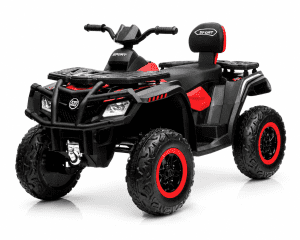
24V J618 4×4 ATV
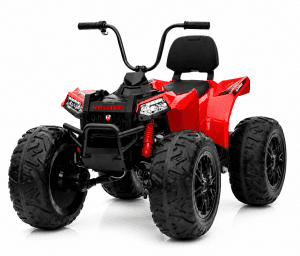
24V – 2129 4×4 Electric ATV With Remote Control
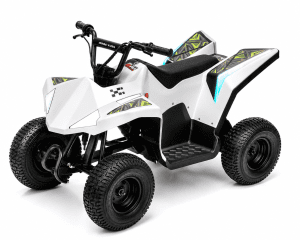
350W 36V Electric Hyper GoGo Quad 4-Wheeler Sport ATV
ATV 4 wheelers use a wide four-wheel chassis, electric drivetrain, handlebar steering, and terrain-focused tires to provide more stable outdoor riding than two-wheel electric bikes. The CarZoneToys ATV collection centers on battery-powered kids and youth quads rather than gasoline-powered powersports machines, with current models using 24V and 36V electrical platforms.
The range includes the 36V HYPER GOGO Electric Quad ATV, 24V J618 4×4 ATV, and 24V 2129 4×4 Electric ATV With Remote Control. These models use different battery, motor, tire, control, and chassis setups, so voltage alone should not decide which four wheeler fits a rider.
A higher-output electric quad can provide stronger drive response, but useful off-road performance also depends on motor wattage, powered-wheel configuration, tire grip, gearing, suspension, rider load, and surface resistance. Speed controls, braking hardware, steering geometry, and manufacturer rider limits are equally important when matching an ATV to a child or teen.
For backyard paths, grass, compact dirt, or other suitable private riding areas, the best ATV is the one whose complete drivetrain and rider specifications match the intended use.
Electric Quad Architecture and Four-Wheel Chassis Stability
An electric ATV combines a battery pack, motor controller, drive motor or motors, gearbox or reduction system, steering assembly, four-wheel chassis, and braking hardware. The battery stores electrical energy, while the controller regulates how that energy reaches the motor when the rider applies the throttle or pedal.
Four wheels create a wider support footprint than a two-wheel vehicle. Front wheels manage steering while the rear or multiple powered wheels transfer drive force to the ground depending on the individual drivetrain. The wider track can improve low-speed stability, but it does not remove the need for correct steering, braking, rider position, and adult supervision.
Frame geometry also affects handling. Wheelbase, track width, seat height, and rider position influence how weight moves when the ATV starts, stops, or turns. A low, centered riding position can make the platform easier to control, while a wider stance provides more lateral support.
The electrical drivetrain should be evaluated separately from the chassis. A 24V or 36V battery identifies the voltage platform but does not tell the full story about speed, range, traction, or rider capacity. Motor output, gearing, battery capacity, and wheel design determine how effectively stored electrical energy becomes movement.
| ATV Component | Mechanical Role | Practical Result |
|---|---|---|
| Battery pack | Stores electrical energy | Supplies the drive system |
| Motor controller | Regulates current to the motor | Controls acceleration and speed |
| Electric motor | Converts electricity into rotation | Produces drive force |
| Reduction drive/gearbox | Changes motor speed into usable torque | Helps move the ATV under load |
| Four-wheel chassis | Supports rider and running gear | Creates a stable riding platform |
| Steering assembly | Changes front-wheel direction | Controls vehicle path |
24V and 36V Power Systems, Motor Output, and Torque
Battery voltage defines the electrical class of an ATV, but the motor and controller determine how that electrical platform is used. CarZoneToys currently carries both 24V electric ATVs and a 36V electric quad, giving riders different levels of electrical and mechanical performance within the same four-wheeler category.
The HYPER GOGO Hyper Quad uses a 36V 350W motor system. Its higher-output setup is paired with a gear-reduction drive designed to convert motor rotation into useful wheel torque. This becomes important when resistance increases on grass, compact dirt, or an incline.
The 24V J618 and 24V 2129 occupy a different part of the collection. Both are presented as 4×4 ATV platforms, while the 2129 is built around a four-wheel-drive ride-on configuration. The useful comparison is therefore not simply 24V versus 36V. Buyers should compare how each model applies its available power.
Motor wattage describes rated motor output. Battery voltage describes the operating electrical system. Battery capacity describes stored charge. Gearing determines how motor speed is converted into wheel torque. These specifications work together.
A lower-voltage ATV with multiple driven wheels can behave differently from a higher-voltage model using a different drivetrain, so the exact model specification should always take priority over assumptions based on voltage.
Tire Traction, Suspension, and Off-Road Surface Control
An ATV needs enough traction to turn motor output into controlled movement. Tire diameter, tread pattern, tire material, wheel width, suspension, and surface condition all affect how much usable grip reaches the ground.
The HYPER GOGO Hyper Quad uses 13-inch pneumatic tires with an off-road tread pattern. Air-filled tires can absorb part of the vibration created by uneven terrain while the tread helps the wheel maintain contact on suitable outdoor surfaces. Its rear suspension adds another layer of movement control by allowing the chassis and wheel assembly to react to smaller bumps without transferring every impact directly to the rider.
The 24V 2129 uses a different approach, with EVA-style wheels listed for its four-wheel-drive platform. Tire construction changes how a quad feels, so pneumatic and EVA systems should not be treated as identical simply because both are designed for outdoor use.
Surface resistance also changes electrical demand. Smooth pavement requires less drive force than grass or an incline. Loose or uneven surfaces can reduce traction while simultaneously making the motor work harder. This can affect acceleration, speed, and battery duration.
The term “off-road” should therefore be matched to the individual ATV’s stated operating conditions. A kids electric quad designed for grass and firm dirt should not automatically be treated like a full-size recreational ATV intended for deep mud, steep trails, water, or highly technical terrain.
| Terrain Factor | Mechanical Effect | What to Compare |
| Tire tread | Controls contact with the surface | Grip pattern and intended terrain |
| Tire material | Changes vibration and traction | Pneumatic, EVA, or model-specific setup |
| Suspension | Manages wheel/chassis movement | Shock absorption and stability |
| Surface resistance | Increases drivetrain demand | Pavement vs. grass vs. dirt |
| Incline | Requires additional torque | Motor and gearing capability |
| Rider load | Adds drivetrain resistance | Model-specific weight rating |
Speed Modes, Braking, Reverse, and Rider Control
Electric ATV performance needs to remain manageable at the handlebars. Throttle response, speed modes, braking hardware, reverse operation, and steering control determine how easily a rider can manage the power available from the drivetrain.
The HYPER GOGO Hyper Quad provides a clear example. Its manufacturer lists multiple operating settings with approximately 5 mph and 10 mph forward modes, plus a lower Kids mode limited to about 3.1 mph through the HYPER GOGO app. This allows available speed to be reduced while a rider becomes familiar with steering and braking.
The Hyper Quad also uses a rear disc brake operated from the handlebar. A mechanical braking system provides a direct way to reduce wheel speed rather than relying only on releasing the accelerator. Reverse functionality helps with low-speed repositioning when turning space is limited.
The 24V 2129 uses forward and reverse controls together with high and low speed settings, while CarZoneToys identifies its version as a remote-control model. That gives the current ATV collection more than one approach to speed and movement management.
These features should be considered alongside rider experience. A higher maximum speed is not automatically an advantage. Controlled throttle response, reliable braking, predictable steering, and an appropriate speed setting can matter more during early riding sessions.
Riders also need enough physical reach to operate the handlebar, accelerator, and brake controls without changing their seated position.
Battery Capacity, Runtime, and Charging Cycles
Electric ATV runtime depends on stored battery energy and how quickly the drivetrain uses it. Voltage alone cannot provide an accurate runtime estimate. Battery capacity, motor output, speed setting, rider weight, terrain, tire resistance, temperature, and repeated acceleration all influence energy consumption.
The HYPER GOGO Hyper Quad provides a useful verified example. Its battery is rated at approximately 36V 5.2Ah, and the manufacturer states up to 60 minutes of runtime or roughly 10 miles of range under suitable conditions. Those figures can change with rider weight and road or terrain conditions.
The same principle applies to the 24V models. Driving through grass or climbing an incline normally requires more current than traveling steadily across a smooth hard surface. Higher motor demand can therefore shorten a riding session even when the battery started fully charged.
Charging specifications are model-specific as well. The Hyper Quad manufacturer states approximately five hours for charging its battery. Other ATV batteries and chargers can require different periods, so one charging time should never be applied across the entire collection.
Only a charger designed for the installed battery system should be used. Battery replacement also needs to match voltage, required capacity, connector type, dimensions, polarity, chemistry, and manufacturer requirements.
| Battery Factor | What It Controls | Buying or Ownership Check |
| Voltage | Electrical operating platform | 24V or 36V model system |
| Amp-hour capacity | Available stored charge | Compare exact battery specification |
| Motor demand | Rate of energy use | Check motor configuration |
| Speed mode | Changes power requirement | Higher output can use energy faster |
| Rider weight | Changes drivetrain load | Stay within stated capacity |
| Terrain | Changes rolling resistance | Rougher surfaces increase demand |
| Charger specification | Controls battery recharge | Use the correct model-compatible charger |
Rider Fit, Weight Capacity, and Electric ATV Safety
An ATV should be selected around the rider before motor power or styling. Seat height, handlebar reach, foot position, brake reach, weight capacity, speed range, and manufacturer age guidance determine whether the rider can physically control the quad.
The HYPER GOGO Hyper Quad is positioned by its manufacturer for riders age 12 and above, with a stated maximum rider weight of 165 lb. Its published specifications also list a seat height of approximately 23 inches. Those measurements make it possible to evaluate fit instead of assuming that every electric four wheeler suits every child.
The 24V ride-on ATV models occupy a different part of the category and should use their own manufacturer guidance. A younger-rider 24V quad and the larger Hyper Quad should not share a universal age or weight recommendation simply because both have four wheels.
Protective equipment and supervision remain necessary. Appropriate helmet and protective gear should match the vehicle, riding conditions, rider age, and applicable safety guidance. Private riding space should be checked for traffic, steep slopes, water, obstacles, drop-offs, and other hazards before use.
Electrical ATVs also require dry operating and storage conditions unless a manufacturer specifically states otherwise. HYPER GOGO warns against using its Hyper Quad in wet or icy conditions because water can damage electrical and drive components.
Choosing Between CarZoneToys Electric ATV 4 Wheelers
The right ATV 4 wheeler starts with the rider and intended terrain. The current CarZoneToys collection provides three different model entities rather than one generic ATV configuration.
The 36V HYPER GOGO Electric Quad ATV is the more performance-defined option in the range. Its verified specifications include a 350W motor, 36V 5.2Ah lithium battery, 13-inch pneumatic tires, rear suspension, rear disc braking, reverse, app-based speed control, and speeds up to 10 mph. It is aimed at older kids and teens who fit its stated rider requirements.
The 24V 2129 4×4 Electric ATV With Remote Control focuses on a ride-on-style four-wheel-drive setup. Available specifications for the 2129 platform include high and low speed operation, forward and reverse movement, EVA wheels, lighting, and multimedia functions. Its lower-voltage platform should be compared by actual drivetrain and rider specifications rather than treated as a smaller version of the Hyper Quad.
The 24V J618 4×4 ATV gives CarZoneToys another 24V four-wheeler option. Because current detailed specifications for this model are not consistently exposed across available product sources, motor output, battery capacity, speed, rider limit, and control features should be confirmed on the live product record before making a final comparison.
For any of the three, prioritize rider fit first, then motor and battery system, terrain compatibility, tires, suspension, braking, speed management, and charging requirements. For broader ownership costs, read How Much Does a Four Wheeler Cost? and use the CarZoneToys battery guide when comparing charging and battery care.