
Bumper Cars
Our Collection / Bumper Cars
Featured Products
Browse hand-picked products from this collection.
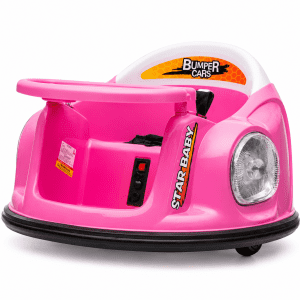
12V Bumper Car – 360-Degree Spin
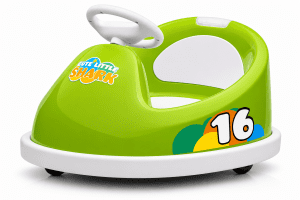
Bumperz Kids Electric 6V Ride-On Bumper Car
Bumper cars for kids combine a rechargeable electric drivetrain with a compact single-rider chassis designed for turning, spinning, and controlled low-speed movement. Unlike a conventional ride-on car that mainly follows a forward steering path, a bumper car places much more emphasis on rotation, tight maneuvering, and impact protection around the body.
The CarZoneToys Bumper Cars collection is centered on 12V electric ride-on bumper cars, including a 12V Bumper Car – 360-Degree Spin model. The category is built around 360° movement, compact electric drive, parent-assisted control, and a protective bumper-style outer structure.
The right bumper car should be selected by rider fit, control layout, available play space, battery system, movement type, seat restraint, and intended riding surface. A larger body or stronger battery does not automatically make one model better for every child.
For younger riders, predictable controls and adult supervision matter more than maximum speed. For indoor or compact play areas, turning radius and rotation capability can matter more than straight-line performance.
12V Electric Drive and Low-Speed Power Delivery
A 12V bumper car uses a rechargeable battery to supply electrical energy to one or more drive motors through a control system.
The battery provides the stored energy, while the motor controller determines how that energy reaches the drivetrain in response to the rider’s controls. The motors then convert electrical power into wheel movement.
Bumper cars do not need the same straight-line performance as larger Jeeps or go-karts. Their drivetrain is better understood around controlled acceleration, turning response, and repeated direction changes.
A 12V electrical platform can provide enough power for this type of low-speed ride-on when paired with motors, gearing, and a controller designed for the vehicle’s weight.
Battery voltage should not be used to estimate runtime by itself. Battery capacity, rider weight, motor demand, floor resistance, repeated spinning, and charging condition all affect how long the vehicle operates.
Repeated changes in direction can also use energy differently from steady forward driving. A bumper car that spends much of its play session spinning and turning is placing a different demand on its motors than a standard ride-on moving steadily along a driveway.
| Drive Component | Main Function | Practical Effect |
|---|---|---|
| 12V battery | Stores electrical energy | Powers the ride |
| Electric motors | Convert energy into wheel movement | Drives and rotates vehicle |
| Controller | Regulates motor output | Manages movement response |
| Rider controls | Send directional input | Changes speed and direction |
| Gearboxes | Transfer motor force | Supports low-speed torque |
| Battery capacity | Determines stored energy | Influences play duration |
360-Degree Spin Systems and Independent Direction Control
The defining feature of a 360° bumper car is its ability to rotate in a much tighter area than a conventional steering-wheel ride-on.
A normal kids’ car turns by changing the angle of its front wheels and then moving through a curved path. A spin-focused bumper car can use its drive-wheel arrangement to change the direction of each side of the vehicle more independently.
When one drive side moves differently from the other, the chassis can rotate around a much smaller area. This makes complete spins and rapid direction changes possible without requiring a long wheelbase or large turning circle.
This movement pattern is particularly useful in controlled play areas where straight-line distance is limited.
The rider still needs clear space. A vehicle that can rotate in place sweeps its complete body around the center of the chassis. Furniture, walls, steps, parked vehicles, pools, and other obstacles should remain outside that rotation area.
The surface also affects how smoothly the car spins. Firm, flat flooring gives the wheels a predictable contact surface, while thick grass or rough ground creates more resistance.
360° capability should therefore be considered together with floor type and available space rather than treated only as an entertainment feature.
Parent Control and Rider-Operated Movement
Parent-assisted control is an important supporting feature in kids’ bumper cars because younger riders may need help understanding direction and stopping.
On models equipped with remote control, an adult can communicate with a receiver inside the ride-on to assist with vehicle movement. The exact controls available through the remote can differ by model, so steering, speed selection, stopping, and direction functions should be confirmed from the individual product specification.
The child’s own control system may use joysticks, levers, buttons, or another compact directional layout rather than the steering-wheel-and-pedal configuration found in standard ride-on cars.
Joystick-style controls are well suited to spinning vehicles because separate inputs can be used to tell the drive system which direction to move.
Adult control should be treated as assistance rather than a replacement for supervision. The person holding the remote still needs a clear view of the rider, vehicle, and surrounding play area.
The rider should also learn that releasing or changing a control can change movement quickly. Starting in an open space gives a child more room to understand forward movement, reverse, turns, and rotation before playing near other bumper cars.
| Control Feature | Role | Buying Check |
|---|---|---|
| Rider controls | Child-directed movement | Check ease of operation |
| Parent remote | Adult assistance | Confirm model-specific functions |
| Receiver | Processes remote commands | Must pair correctly |
| Direction control | Changes vehicle path | Forward, reverse, rotation |
| Speed setting | Limits available output | Check available modes |
| Stop function | Ends motor movement | Confirm exact control method |
Protective Bumper Ring, Seat Restraint, and Rider Position
The protective outer bumper is one of the strongest differences between a bumper car and a normal ride-on vehicle.
A bumper ring surrounds the lower perimeter of the body and creates a contact zone between the vehicle and other appropriate bumper cars or nearby objects during controlled play. Its purpose is to reduce direct contact with the harder central body structure during light bumps.
That does not make every collision appropriate.
Bumper cars for children remain low-speed ride-on toys and should be used in open, controlled areas. High-speed impacts, stairs, roadway use, steep slopes, and collisions with heavy fixed objects are outside the purpose of the bumper system.
The seat also needs to fit the rider correctly. A child should remain centered instead of leaning over the sides during a spin.
Seat belts or harnesses, where fitted, help keep the rider in the intended seating position during changes in direction. The exact restraint design should be checked on each model rather than assuming every bumper car uses the same system.
Rider weight matters as well. A heavier load changes acceleration, turning response, battery consumption, and stopping behavior. Always use the manufacturer’s listed weight capacity.
The combination of bumper protection, proper seating, restraints, low-speed controls, and adult supervision is more meaningful than relying on any single safety feature.
Compact Chassis, Wheel Layout, and Play-Space Requirements
Bumper cars use short, compact chassis because they are intended to maneuver within relatively small spaces.
A shorter vehicle body reduces the amount of area needed for rotation. The rider sits near the center of the chassis, keeping weight close to the point around which the vehicle turns.
Wheel placement is equally important. The drive wheels need enough spacing to support the rider while still allowing the motors to create tight directional changes.
Unlike a Jeep or truck, ground clearance is usually not the main design priority. A bumper car benefits more from a low center of gravity and compact body because those attributes support controlled spinning and low-speed stability.
The play area should be larger than the vehicle itself.
The car needs enough clearance not only to move forward but to rotate its complete body without striking unsafe obstacles. Multiple bumper cars need additional room so riders can turn and move around each other rather than becoming trapped against walls.
A useful setup includes:
- a firm, relatively flat surface
- clear visibility for supervising adults
- no nearby stairs or drop-offs
- room for complete rotation
- enough separation from furniture and fragile objects
- a dry surface with predictable wheel contact
Indoor and Outdoor Surface Compatibility
Bumper cars work best when the wheel system can roll and rotate without excessive resistance.
Smooth indoor flooring, finished concrete, and similarly firm surfaces give the drivetrain a predictable platform for turning and 360° movement.
Rough surfaces change that behavior.
Thick grass creates additional rolling resistance. Loose gravel can interfere with wheel movement. Deep carpet may make rotation harder because the wheels need more force to move sideways or change direction. Uneven pavement can also create vibration and unpredictable wheel loading.
Outdoor use should therefore be based on the exact product instructions and surface rather than assuming every electric bumper car is designed for lawn or off-road riding.
Wet surfaces should also be avoided unless a manufacturer specifically states otherwise. Electrical ride-ons contain motors, wiring, battery connections, switches, and charging components that should be protected from inappropriate water exposure.
The protective bumper ring should be inspected periodically as well. Cracks, loose mounting points, damaged wheels, or unusual motor sounds can indicate that the vehicle needs attention before the next play session.
| Surface | Expected Behavior | Suitability Priority |
|---|---|---|
| Smooth indoor floor | Low rolling resistance | Strong match |
| Smooth concrete | Predictable wheel movement | Strong match if dry |
| Flat patio | Good rotation potential | Check product guidance |
| Thick carpet | Higher resistance | Model-dependent |
| Grass | Higher motor demand | Usually less suitable |
| Gravel/rough ground | Unpredictable wheel contact | Avoid unless specifically approved |
Battery Runtime, Charging, and Long-Term Care
The 12V label identifies the electrical system but does not tell buyers exactly how many minutes a bumper car will run.
Runtime depends on the battery’s actual capacity, motor configuration, rider weight, surface resistance, movement pattern, and battery condition.
A car that repeatedly performs full spins can draw energy differently from one driven slowly in straight lines.
Charging should always use the charger intended for the exact bumper car. Voltage, connector, charging output, battery chemistry, and polarity all need to match.
A generic charger should not be considered safe simply because its plug fits.
After play, the battery should be charged according to the manufacturer’s instructions. Repeatedly leaving a rechargeable ride-on battery deeply discharged for long periods can reduce available capacity over time.
Storage conditions also matter. The vehicle and charger should remain in a dry location away from extreme heat and moisture. Battery connections, charging ports, wires, and controls should be inspected if the vehicle has been stored for an extended period.
If runtime drops noticeably, the battery may be aging, but wheel resistance, damaged motors, poor electrical connections, or additional rider load can also reduce operating time.
Choosing the Right Bumper Car for Your Child
Start with rider fit.
Check the manufacturer’s age guidance, maximum rider weight, seat dimensions, restraint system, and control layout. A child should be able to sit securely and operate the vehicle without leaning excessively toward the controls.
Next, consider how the bumper car moves.
The current CarZoneToys collection is centered on 12V electric bumper cars with 360° spin capability, making rotation and tight maneuverability more important than high straight-line speed.
Then look at parent-control features. For younger riders, a compatible remote-control system can provide useful adult assistance while they learn how the vehicle responds.
Available play space should come next. Measure enough room for the complete car to rotate, not simply enough space for it to fit while stationary.
Surface type matters as well. Smooth, firm ground allows a 360° drive system to work more naturally than grass, gravel, or uneven terrain.
Finally, compare battery capacity, charging requirements, wheel design, bumper construction, restraints, included controls, and exact rider limits.
The strongest bumper car is the one whose 12V drivetrain, 360° movement system, controls, protective bumper, rider fit, battery, and required play space match the child and the area where it will actually be used.