
Electric Mopeds
Our Collection / Electric Mopeds
Featured Products
Browse hand-picked products from this collection.
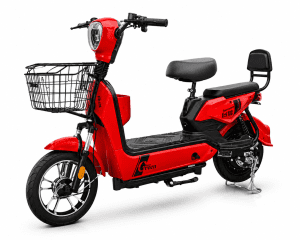
48V Electric Moped
Electric mopeds combine a seated two-wheel chassis with an electric motor, rechargeable battery, controller, throttle system, and rider controls for short-distance personal transportation. Unlike a gasoline-powered moped, electrical power moves from the battery through the controller to the motor without fuel combustion, giving the drivetrain fewer engine-related service parts and direct power response.
The current CarZoneToys Electric Mopeds collection is centered on one model: the 48V Electric Moped. CarZoneToys lists it with a 500W motor, 48V electrical platform, multiple speed modes, a long-range battery setup, and an anti-theft system.
Those specifications should be evaluated as one system. Motor wattage affects available output, battery voltage defines the electrical platform, battery capacity influences stored energy, and the controller determines how that power reaches the motor. Brakes, tires, frame geometry, rider position, lighting, and local road rules then determine how practical the vehicle is for its intended use.
For daily transportation, the useful question is not simply how fast an electric moped can travel. Range requirements, rider control, charging access, stopping performance, storage, security, and legal classification all need to be considered before purchase.
48V Electrical Architecture and 500W Motor Performance
A 48V electric moped sends stored battery energy through a motor controller to its electric drive motor. The controller responds to rider input and regulates how much electrical current reaches the motor, allowing the vehicle to accelerate without the fuel-delivery and combustion cycle found in a gasoline engine.
The CarZoneToys model uses a 500W motor within its 48V electrical platform. Motor wattage describes rated power output, while voltage describes the operating electrical system. These figures are related but should not be treated as the same measurement.
A 500W motor can provide useful output for regular local riding, but acceleration and hill response still depend on more than motor wattage. Rider weight, controller programming, wheel diameter, drivetrain design, battery charge, road gradient, tire pressure, and surface resistance all change the amount of usable performance reaching the road.
Speed modes add another layer of control. Instead of requiring the same motor response in every situation, selectable modes can change how the controller delivers available output. Lower modes can support smoother low-speed operation, while higher settings make more of the system’s programmed performance available.
The exact motor mounting arrangement, peak output, torque figure, and maximum programmed speed should remain model-level specifications rather than assumptions based only on the 500W rating.
| Power Component | Mechanical Role | What It Changes |
|---|---|---|
| 48V battery system | Supplies electrical energy | Defines operating voltage |
| 500W motor | Converts electrical power into motion | Provides drive output |
| Motor controller | Regulates current to the motor | Controls acceleration response |
| Throttle input | Sends rider demand to controller | Changes power delivery |
| Speed modes | Adjust controller output | Provides selectable performance |
| Wheel/drivetrain | Transfers motor force to road | Affects usable acceleration |
Battery Capacity, Range, and Charging Efficiency
Battery voltage alone does not tell a rider how far an electric moped can travel. Range depends on how much energy the battery stores and how quickly the motor, controller, lighting, and other electrical systems consume it.
A 48V battery can be built with different capacity ratings. Amp-hours, or Ah, describe charge capacity, while watt-hours provide a more direct measure of total stored electrical energy when voltage and capacity are considered together. The exact capacity of the current CarZoneToys moped should therefore be confirmed from its product specification before calculating expected distance.
Operating conditions can change range significantly. Higher sustained speeds use more energy. Repeated acceleration increases current demand. Hills require greater motor effort, while rider weight, tire pressure, wind, temperature, and surface condition also affect efficiency.
This makes manufacturer range figures reference values rather than guaranteed travel distances.
Charging equipment matters just as much as battery size. The charger needs to match the battery voltage, chemistry, connector, and required charging current. An incompatible charger can damage the battery or electrical system.
For regular use, charging access should be considered before purchase. A rider using an electric moped for recurring local trips needs enough battery reserve to complete the route without depending on the maximum advertised range under ideal conditions.
Long-term care should also include keeping charging connections clean and dry, following the manufacturer’s storage guidance, and monitoring any clear reduction in usable range as the battery ages.
Speed Modes, Throttle Response, Braking, and Vehicle Control
Electric moped performance becomes useful only when the rider can control it predictably. Throttle response, steering geometry, braking hardware, speed settings, wheelbase, tires, and rider position work together whenever the vehicle starts, turns, or stops.
The current CarZoneToys 48V Electric Moped includes selectable speed modes. This allows the control system to provide different programmed levels of performance instead of treating maximum output as the only riding setting.
Lower-speed operation can be useful in tighter riding areas, during early familiarization, or where smoother throttle response is preferred. Higher settings increase available performance but also place more demand on rider judgement, braking distance, and battery energy.
Braking should be evaluated separately from motor power. A stronger motor does not improve stopping performance. Brake type, tire grip, vehicle weight, road condition, rider load, and speed all affect how much distance is needed to slow the moped.
Tires provide the final contact point between the vehicle and the road. Correct pressure and usable tread help maintain traction during acceleration, braking, and cornering. Suspension, where fitted, can manage bumps and road irregularities but does not replace appropriate tires or careful speed selection.
| Control Factor | Function | Practical Effect |
|---|---|---|
| Speed modes | Change programmed output | Adjust available performance |
| Throttle | Controls motor demand | Regulates acceleration |
| Braking system | Reduces wheel speed | Controls stopping |
| Tires | Maintain road contact | Affect grip and stability |
| Steering geometry | Directs front wheel | Controls vehicle path |
| Rider position | Changes weight distribution | Affects balance and handling |
Frame Geometry, Seating Position, and Everyday Rider Fit
Electric mopeds use a different riding position from standing electric scooters and conventional bicycles. A fixed seat, foot supports or foot platform, upright handlebar position, and low-speed throttle control create a seated vehicle layout intended for motor-driven travel.
That makes rider fit an important purchasing factor.
Seat height determines how easily the rider can mount the moped and place their feet when stopping. Handlebar reach affects steering posture, while foot position determines whether the rider can remain balanced without stretching forward or compressing their legs excessively.
Wheelbase also influences handling. A longer chassis can feel more stable in a straight line, while more compact dimensions may make low-speed turning easier. Vehicle weight affects both stability and how difficult the moped is to move manually when the motor is off.
The manufacturer’s maximum rider or load capacity should always be followed. Motor wattage does not establish how much weight the chassis, wheels, suspension, seat, and braking system are designed to support.
For daily ownership, storage dimensions matter as well. A moped-style electric vehicle occupies more space than a folding stand-up scooter and may be considerably heavier to lift. Buyers should consider garage, covered parking, apartment access, and charging location before ordering.
Lighting, mirrors, displays, turn signals, and other equipment should also be checked on the exact product record because those features can affect both everyday usability and potential road-use requirements.
Anti-Theft Systems, Parking, and Electrical Security
The current CarZoneToys 48V Electric Moped is listed with an anti-theft system, making security a genuine supporting entity for this collection rather than generic moped filler.
An electronic anti-theft feature can make unauthorized operation more difficult, but it should not be treated as the only form of security. Electric mopeds combine a relatively high-value battery, motor, controller, and complete vehicle chassis in one portable platform, so physical parking security remains important.
When leaving the vehicle unattended, the frame should be secured to a fixed object using a lock appropriate for the vehicle. If the battery is removable, its locking mechanism and storage options should be understood before relying on removal as a theft deterrent.
Parking location also affects battery and electrical condition. Covered, dry storage helps protect charging connectors, wiring, displays, switches, and exposed metal components from prolonged weather exposure.
The charger should be stored separately in a dry location where cables and connectors are not under strain. Electrical accessories should not be modified or replaced with incompatible parts merely to add additional security or convenience features.
For regular commuting, security therefore becomes part of ownership cost. Buyers should consider the factory anti-theft system together with physical locks, secure parking, battery access, and storage conditions.
Electric Moped Road Use, Registration, and Legal Classification
The words electric moped describe the product category, but they do not by themselves prove how a vehicle is legally classified for use on public roads.
NHTSA specifically states that marketing terms such as “moped,” “motor scooter,” and similar names do not determine which federal motor-vehicle rules apply. Classification depends on the vehicle’s design, performance, intended road use, and applicable requirements. States can also create their own legal definitions and operating rules.
This means a headlight, mirrors, indicators, or a particular speed mode should never be presented as automatic proof that an electric moped is “street legal everywhere.”
Rules can differ by state and may involve vehicle classification, licensing, registration, insurance, age, helmet use, road type, maximum speed, equipment, and where the vehicle may operate.
CarZoneToys is located in Georgia, where the Department of Driver Services publishes specific rules for mopeds and scooters. Georgia’s published moped definition is written around engine displacement, and its road-use rules include rider licensing or permitting requirements, helmet use, and roadway restrictions. Electric vehicles can create additional classification questions because their power systems do not use cubic-centimeter engine displacement.
For that reason, buyers should confirm the exact vehicle specifications with their state DMV or equivalent authority before using the moped on a public street.
Choosing the CarZoneToys 48V Electric Moped
Choosing an electric moped should begin with the route and intended use rather than maximum speed.
Start with distance. Estimate the normal round trip and leave battery reserve rather than planning around the absolute maximum range figure. Then consider hills, rider load, stop-and-go traffic, temperature, and speed because each can change energy use.
Next, evaluate the drive system. The current CarZoneToys Electric Moped uses a 48V platform with a 500W motor and selectable speed modes. These specifications establish its core electrical architecture, while exact battery capacity, top speed, range, charging time, tire size, braking configuration, rider capacity, and dimensions should be confirmed from the current product record.
Rider fit comes next. Compare seat height, handlebar reach, foot position, vehicle weight, and stated maximum load. A comfortable upright position should allow the rider to operate the throttle, brakes, and steering without stretching.
Security also deserves attention because the current model includes an anti-theft system. Factory security should be combined with suitable locking and storage rather than treated as complete theft protection.
Finally, determine how the vehicle will legally be used. Public-road eligibility should be confirmed against current local requirements instead of assuming that the product name “electric moped” establishes its registration or licensing category.
CarZoneToys currently lists one 48V Electric Moped in this collection, so the collection should remain focused on that model’s real electrical, control, battery, security, and daily-riding characteristics as the inventory grows.