
Electric Rickshaws
Our Collection / Electric Rickshaw
Featured Products
Browse hand-picked products from this collection.
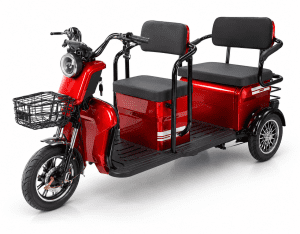
48V Electric Trike – Rickshow
Electric rickshaws use a three-wheel chassis, rechargeable battery, electric motor, controller, and rear load-support structure to provide stable short-distance transport without a gasoline engine. Their wider rear stance gives the vehicle a different balance profile from two-wheel electric bikes and mopeds, while the electric drivetrain provides direct power without fuel combustion.
The current CarZoneToys Electric Rickshaw collection is centered on the 48V Electric Trike – Rickshow. This model combines a 48V electrical platform with a 1000W motor, large cargo capacity, suspension system, and reverse mode. These features place it closer to a utility-focused electric trike than a lightweight recreational bicycle.
The useful buying questions go beyond motor size. Three-wheel stability, load placement, battery capacity, braking, suspension, turning space, reverse control, rider fit, and charging access all affect how practical an electric rickshaw becomes.
A 1000W motor can provide useful drive output under increased load, but wattage alone does not define carrying capacity, range, hill performance, or road eligibility. Those depend on the complete vehicle specification and intended use.
Three-Wheel Chassis Architecture and Load Stability
An electric rickshaw uses three contact points with the ground: one steering wheel at the front and two wheels across the rear. This configuration creates a wide rear support base that does not require the rider to balance the vehicle in the same way as a conventional two-wheel bike.
The front wheel controls direction through the fork and steering assembly. The rear section supports much of the vehicle structure, drivetrain, and cargo area. Keeping the load positioned correctly around the rear axle helps the chassis remain predictable while starting, turning, or stopping.
Three wheels do not make a vehicle impossible to tip. Cornering speed, uneven ground, steep cross-slopes, cargo placement, tire condition, and sudden steering inputs can still change the center of gravity. A heavy load placed too high or too far to one side can reduce stability even when it remains below the stated maximum capacity.
Wheelbase also matters. A longer chassis can provide more room for cargo or seating and support steadier straight-line movement, but it also requires more space when turning. Rear track width affects side-to-side stability while overall dimensions determine whether the rickshaw fits through gates, storage areas, paths, or work spaces.
The correct three-wheel platform therefore balances chassis dimensions, rear axle design, load position, steering geometry, and rated carrying capacity rather than relying on wheel count alone.
| Structural Part | Mechanical Role | Practical Effect |
|---|---|---|
| Front steering wheel | Controls direction | Guides vehicle movement |
| Rear wheel pair | Creates wide support base | Improves low-speed stability |
| Rear axle | Supports and transfers rear load | Helps distribute vehicle weight |
| Chassis | Connects drivetrain and cargo structure | Defines overall strength |
| Wheelbase | Positions front and rear assemblies | Affects stability and turning space |
| Cargo area | Carries approved load | Adds utility capability |
48V Electrical System and 1000W Motor Output
The CarZoneToys Electric Rickshow uses a 48V electrical platform paired with a 1000W motor. The battery supplies stored electrical energy, while the motor controller regulates power delivery according to rider input. The motor then converts that electrical energy into mechanical movement.
Motor wattage and battery voltage describe different parts of the system. The 1000W rating describes motor output, while 48V identifies the electrical operating platform. Battery capacity must be considered separately because two 48V batteries can store very different amounts of energy.
A utility-focused three-wheel vehicle needs useful low-speed drive force because the motor may be moving more total mass than a lightweight electric bike. Rider weight, cargo load, road gradient, tire pressure, controller tuning, gearing, and battery charge all influence how effectively the motor moves that load.
This also means a 1000W motor should not automatically be translated into a specific top speed or climbing grade. Final performance depends on the entire drivetrain.
The controller is especially important. It manages how current moves from the battery to the motor and helps determine throttle response, acceleration behavior, and available output. A well-matched controller and motor create more usable performance than simply fitting a larger motor to an electrical system that cannot support it properly.
| Power Factor | What It Represents | Buying Impact |
|---|---|---|
| 48V system | Electrical operating voltage | Defines battery/controller class |
| 1000W motor | Rated motor output | Provides drive force |
| Battery capacity | Stored electrical energy | Affects possible operating distance |
| Controller | Regulates motor current | Changes throttle and power response |
| Rider/load weight | Total mass being moved | Changes motor demand |
| Gradient | Resistance caused by hills | Requires additional drive output |
Cargo Capacity, Weight Distribution, and Utility Use
Large cargo capacity is one of the current model’s defining features, so load management should be central to this collection rather than treated as a small accessory detail.
Cargo changes how a three-wheel electric vehicle behaves. Additional weight increases the amount of work required from the motor during acceleration and hill climbing. It also changes braking demand because the vehicle has more mass to slow down.
Where that weight sits matters too. Cargo positioned low and close to the rear axle generally creates a different handling effect from a tall or uneven load. Items should remain secured so they cannot shift sharply during a turn or while braking.
The manufacturer’s stated load limit should always control how much weight is carried. A large cargo platform does not mean unlimited payload, and the 1000W motor rating does not define the chassis load limit.
Utility use can include moving supplies, equipment, packages, or other approved loads over suitable short-distance routes. The exact application should be matched to vehicle dimensions, rated capacity, terrain, storage access, and braking capability.
For repeated use, buyers should also think about loading height and access. A cargo system may have enough volume for a task but still be impractical if items are difficult to secure or the loaded vehicle cannot fit through the normal route.
Suspension, Tires, and Surface Control
The current 48V Electric Rickshow includes a suspension system, which helps the chassis react to changes in the riding surface.
Suspension allows controlled movement between parts of the wheel assembly and the frame instead of transferring every bump directly into the chassis. This can improve comfort and help the tires maintain more consistent contact over small surface changes.
Suspension does not make every surface suitable. Tire type, wheel diameter, ground clearance, vehicle weight, cargo load, and the condition of the path still determine where the rickshaw can be operated safely.
Smooth pavement places relatively low resistance on the drivetrain. Grass, gravel, rough surfaces, or inclines increase rolling resistance and require additional motor power. A heavily loaded vehicle experiences an even greater increase in demand.
Tires provide the final connection between the motor-driven vehicle and the ground. Correct tire pressure, where applicable, helps maintain grip and reduces unnecessary rolling resistance. Worn or damaged tires affect braking and steering as well as acceleration.
Ground clearance should also be checked before using a three-wheel utility vehicle on uneven paths. A large chassis can still have vulnerable low-mounted components underneath.
| Surface Factor | Mechanical Effect | What to Check |
|---|---|---|
| Suspension | Absorbs part of surface movement | Condition and travel |
| Tire type | Controls road contact | Grip and intended surface |
| Tire pressure | Changes rolling resistance | Maintain specified pressure |
| Cargo weight | Adds drivetrain demand | Stay within load limit |
| Incline | Increases required torque | Match route to vehicle |
| Ground clearance | Determines underside space | Avoid unsuitable obstacles |
Reverse Mode, Steering, and Low-Speed Maneuvering
Reverse is an important feature on a larger three-wheel vehicle because turning space can be limited. The current CarZoneToys Electric Rickshow includes a reverse mode, allowing the vehicle to move backward for parking, repositioning, or leaving confined spaces.
Reverse should be used at controlled speed. A three-wheel vehicle can have different rear visibility from a bicycle or small scooter, especially when cargo occupies space behind the rider.
The rider should check the area before reversing and avoid sudden steering movements. Rear width also matters because the two back wheels follow a wider path than the single front steering wheel.
Forward handling follows the same principle. Turning the front wheel changes vehicle direction, but the rear axle follows a different arc. A rider familiar only with two-wheel bicycles may need time to understand this larger turning footprint.
Vehicle dimensions become important in warehouses, private properties, parking areas, campuses, resorts, or other places where low-speed maneuvering may matter more than maximum speed.
Braking should be considered alongside reverse and steering. Additional cargo increases stopping demand, so the exact brake configuration and maintenance requirements should be confirmed on the current product specification before regular use.
Battery Capacity, Range, and Charging Requirements
A 48V label does not tell buyers how far the electric rickshaw can travel on one charge. Range depends on battery capacity and the amount of energy the vehicle consumes while moving.
Battery capacity may be expressed in amp-hours or watt-hours. A higher-capacity battery generally stores more usable energy, but vehicle weight, cargo load, motor demand, speed, road gradient, temperature, tire resistance, and repeated starts can all reduce operating distance.
This matters more on a utility vehicle because the load can change from one trip to another. The same electric rickshaw may consume noticeably more energy when carrying its maximum approved cargo than when driven with a light load.
Charging time also depends on battery capacity, battery chemistry, and charger output. The correct charger must match the installed battery system, connector, voltage, and manufacturer requirements.
Buyers planning repeated daily use should compare the required route length with realistic battery reserve. Operating close to the maximum claimed range on every trip leaves little margin for hills, heavier loads, wind, cold conditions, or battery aging.
Battery condition changes over time as well. Reduced range after a full charge can indicate declining capacity, but electrical connectors, tire pressure, brake drag, and other mechanical conditions can also affect efficiency.
| Energy Factor | What It Changes | What to Compare |
|---|---|---|
| Battery voltage | Electrical system class | Must match 48V drivetrain |
| Battery capacity | Available stored energy | Check exact Ah/Wh rating |
| Cargo load | Motor energy demand | Heavier loads use more energy |
| Route gradient | Required motor output | Hills reduce range |
| Stop-start use | Repeated acceleration demand | Can lower efficiency |
| Charger output | Recharge rate | Use specified charger |
Rider Fit, Controls, and Everyday Operation
A utility electric rickshaw should fit the person operating it. Seat position, handlebar reach, foot placement, steering effort, brake access, and visibility all affect control.
The rider should be able to operate the throttle, brakes, steering, and reverse controls without stretching or changing position excessively. Seat height should also allow safe mounting and stopping.
Vehicle weight matters when the motor is not running. A large three-wheel platform can be much harder to move manually than an electric bicycle, so storage and parking should be planned before purchase.
The wider rear axle also requires the rider to watch both sides of the vehicle when moving through narrow areas. A gap that appears wide enough from the handlebars may not provide enough clearance for the rear wheels or cargo platform.
Lighting, mirrors, indicators, horn systems, parking brakes, and other equipment should be confirmed from the exact product specification rather than assumed because the vehicle is described as a rickshaw.
The same applies to passenger use. A cargo-capable platform should not automatically be treated as approved passenger seating unless the manufacturer specifically states that configuration and capacity.
Choosing the CarZoneToys 48V Electric Rickshow
The current CarZoneToys Electric Rickshaw collection is built around one clear product entity: the 48V Electric Trike – Rickshow with a 1000W motor, large cargo capacity, suspension system, and reverse mode.
Start the buying decision with intended use. Determine what needs to be moved, how much it weighs, how far the normal route is, and what surfaces the vehicle will cross.
Next, compare load specifications. Cargo volume and maximum load are not the same thing, so confirm the approved weight capacity before purchase.
Then assess the electrical system. The 48V platform and 1000W motor establish the vehicle’s core drive architecture, while exact battery capacity, range, charge time, controller limits, and replacement-battery requirements should be checked on the live product record.
Suspension and tires should match the route. Smooth paved areas create less drivetrain resistance than uneven paths or slopes. Ground clearance and vehicle width also matter where access is limited.
Finally, confirm controls, braking, overall dimensions, rider capacity, included equipment, and the rules governing where the vehicle will be operated.
For the current CarZoneToys inventory, the strongest comparison is not between unrelated passenger taxis, cargo fleets, and commercial rickshaw classes. It is between the actual 48V electrical system, 1000W motor, three-wheel chassis, cargo setup, suspension, reverse capability, battery requirements, and intended route of the available Rickshow model.