
24V Ride On Cars
Our Collection / 24V Ride On Cars
Featured Products
Browse hand-picked products from this collection.
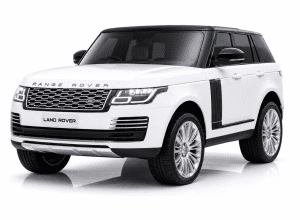
24V Range Rover Ride-On SUV
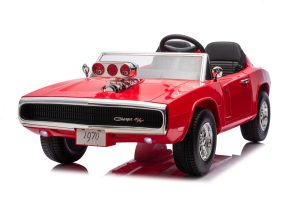
Dodge Ride-On Car (Licensed Dodge)
24V ride on cars use a 24-volt electrical platform that can support higher-output motor configurations than lower-voltage kids’ ride-ons. The extra electrical headroom is useful when a vehicle is built with dual motors, wider wheels, larger body dimensions, or a drivetrain intended to work under greater resistance. Actual performance still depends on the complete setup rather than voltage alone.
A well-matched 24V electric ride on car combines its battery pack with suitable motor wattage, gearing, traction, steering, suspension, and frame strength. These parts determine how the vehicle responds when starting, turning, carrying its rated load, or moving from pavement onto firm grass.
Parental remote control, speed settings, soft-start electronics, seat restraints, and correct rider fit become especially important as motor output increases. Battery capacity also needs separate attention because a higher voltage does not automatically mean a longer riding session.
For buyers moving beyond a basic low-output ride-on, the 24V platform provides more room for performance-oriented vehicle designs while keeping the final choice tied to the child, terrain, and specifications of the individual model.
24V Battery Architecture and Motor Power Delivery
A 24V battery system supplies electrical energy to the motor controller, which regulates how much current reaches the drive motors. The motors convert that energy into rotation, while the gearbox changes motor speed into the torque required at the wheels. This relationship between battery, controller, motor, and gearing determines how a ride-on actually accelerates.
The main advantage of a higher-voltage platform is its ability to support stronger electrical drive configurations without treating the battery voltage itself as the complete performance rating. A 24V ride on equipped with dual motors, for example, can distribute drive force across two powered wheels. That can improve traction and pulling response when the vehicle encounters grass, a mild incline, or a heavier approved load.
Motor wattage remains important. Two vehicles can both use 24V batteries while producing different acceleration and terrain performance because their motors, controllers, and gear ratios are different. The stated motor output should therefore be checked alongside voltage.
Speed works the same way. A 24V label does not provide an exact top speed. Controller programming, gearing, wheel diameter, rider weight, charge level, and surface resistance all affect the final result.
| Performance Factor | Mechanical Role | What It Changes |
|---|---|---|
| 24V battery system | Supplies electrical power | Supports higher-output drive configurations |
| Motor wattage | Converts power into motion | Affects available drive force |
| Dual motors | Powers more than one wheel | Can improve traction and torque distribution |
| Gear ratio | Converts motor speed at the wheels | Balances acceleration and speed |
| Motor controller | Regulates electrical output | Manages acceleration and speed settings |
| Wheel diameter | Changes ground movement per rotation | Influences clearance and final drive behavior |
Traction, Suspension, and Ground Clearance on Outdoor Surfaces
Outdoor performance depends on how effectively the drivetrain can transfer motor output to the ground. A powerful motor provides little benefit if the wheels lose traction, the chassis sits too low, or the suspension cannot keep the vehicle stable over surface changes.
Tire design is one of the first specifications to compare. Wider tread creates a larger contact area, while EVA, rubberized, or pneumatic-style wheel systems can provide different levels of grip and vibration control. The exact tire material should be confirmed from each product specification rather than assumed from the vehicle’s appearance.
Suspension manages movement between the wheels and body. Spring or shock systems can reduce the effect of driveway joints, compact grass, and smaller bumps before that movement reaches the seat and steering system. Suspension does not automatically turn a kids ride on car into a true off-road vehicle, but it can improve comfort and wheel contact on uneven ground.
Ground clearance determines how much space exists between the underside of the chassis and the riding surface. Taller clearance can reduce contact with small surface changes, while low sports-car bodies remain better suited to smoother pavement.
Grass also creates more rolling resistance than a driveway. This makes the motors work harder and increases battery demand. For regular lawn use, motor output, powered-wheel configuration, tires, suspension, and clearance should be evaluated together.
Parental Remote Control, Speed Management, and Soft-Start Systems
A 24V ride on car with parental remote control gives an adult a secondary way to manage vehicle movement while the child learns steering and pedal control. The remote communicates with the vehicle’s receiver or controller and can provide functions such as directional control, speed selection, or stopping depending on the individual model.
Remote override becomes more useful as available drive output increases. A child may understand how to press the accelerator before developing reliable judgement about turning distance, obstacles, or stopping space. Adult control provides another layer of management during that learning period.
Speed modes can also make a higher-output vehicle easier to introduce gradually. A lower setting allows the rider to learn steering response and braking behavior before using the full programmed speed range. This is more useful than selecting a vehicle simply because it carries a higher voltage rating.
Soft-start electronics control the first moment of acceleration. Instead of applying maximum available motor output immediately, the controller raises power progressively. The result is a smoother start that reduces sudden body movement and gives the rider more time to settle into the seat.
Seat belts or other restraints provide positional support during acceleration, turning, and stopping. They should be considered together with seat dimensions, rider height, manufacturer age guidance, and stated weight capacity.
| Control Feature | System Function | Practical Benefit |
| Parental remote | Secondary driving input | Adult control during learning |
| Remote stop | Interrupts movement | Faster intervention |
| Speed modes | Limits available output | Gradual skill development |
| Soft start | Applies power progressively | Smoother acceleration |
| Seat restraint | Holds rider in position | Better stability during movement |
| Steering system | Controls front-wheel direction | Predictable vehicle handling |
Chassis Strength, Seating Capacity, and Rider Fit
A 24V electrical platform does not determine how many riders a vehicle can safely carry. Passenger capacity comes from the chassis design, seat dimensions, axle layout, suspension, and manufacturer weight rating.
Single-seat models can use a compact body with one central rider position. Two-seater ride on cars need additional cabin width and a structure designed to distribute the combined load across the chassis. A wide body that visually appears to have room for two children should not be treated as a two-seater unless the manufacturer states that passenger capacity.
The same rule applies to rider weight. Higher voltage may be used in models designed around larger frames, but it does not create a universal weight limit. The approved maximum load must come from the specification for that exact vehicle.
Wheelbase also affects the way the chassis behaves. A longer wheelbase can provide more cabin room and stable straight-line movement, while a shorter platform may turn more tightly. Steering angle and wheel placement then determine the actual turning radius.
Before buying, check whether the child can reach the steering wheel and accelerator while remaining seated naturally. Enough legroom is important, but an oversized cabin can also make controls difficult for a smaller rider to reach.
Rider fit should therefore be established before comparing decorative features, licensed styling, lighting, or audio systems.
Battery Capacity, Charging, and Energy Demand
Battery voltage tells you the electrical class of the ride-on; battery capacity tells you more about how much stored energy is available. Capacity is commonly listed in amp-hours, or Ah. When comparing two 24V vehicles, a difference in Ah can matter more to potential ride duration than the shared 24V label.
Runtime also changes with operating conditions. A heavier approved load requires more energy to move. Grass and inclines create more resistance than level pavement. Frequent acceleration places a different demand on the battery than steady movement. Motors with greater combined output can also draw energy at a different rate depending on how the controller is configured.
For this reason, a 24V ride on car should not automatically be described as having longer battery life than a 12V model. The actual battery capacity and vehicle load need to be compared.
Charging should follow the instructions supplied with the exact battery and charger. The charger must match the electrical system, connector, and battery type. Replacement batteries should also match the required voltage, capacity range, physical dimensions, polarity, and connector layout specified for the vehicle.
Long-term care includes recharging after use, avoiding prolonged storage with a discharged battery, keeping electrical connections dry, and watching for a clear drop in operating time after a full charge.
| Battery Factor | What It Represents | Buying or Maintenance Check |
| Voltage | Electrical platform | Must match the vehicle |
| Amp-hours | Stored battery capacity | Compare model-specific Ah |
| Motor demand | Energy consumption under power | Compare total motor configuration |
| Rider load | Weight the drivetrain moves | Stay within stated capacity |
| Terrain | Rolling resistance | Grass and slopes increase demand |
| Charger | Recharge system | Use the specified compatible unit |
Selecting a 24V Ride On Car by Performance Requirements
The right 24V ride on car should be selected from the intended riding conditions backward. Start with rider age, physical fit, and stated weight capacity. Then determine whether the vehicle will spend most of its time on pavement, short grass, mixed backyard surfaces, or mild inclines.
For firmer outdoor surfaces, compare total motor output and powered-wheel configuration. Dual-motor systems can provide useful traction where additional drive force is needed, while wheel tread and suspension determine how well that force reaches the ground. Ground clearance becomes more important as the surface becomes less even.
Next, compare the control system. Parental remote functionality, selectable speeds, soft-start acceleration, restraints, and predictable steering can matter more than an impressive maximum-speed figure.
Battery capacity should be checked separately from voltage. Compare the Ah rating, expected runtime stated for the exact model, charger requirements, and replacement-battery availability. This gives a more useful picture of ownership than assuming every 24V battery behaves the same way.
Finally, compare body dimensions, seat count, cabin space, doors, lighting, audio functions, and exterior styling. These features can improve the overall vehicle experience, but they should come after the mechanical requirements have been matched.
A 24V platform makes the most sense when the child and riding area can use the stronger drive configuration it supports. For lighter-duty driving on mostly smooth surfaces, compare the 12V Ride On Cars collection. For a direct voltage comparison, read 12V vs 24V Ride-On Cars: Which Is Right for Your Child?, and use the Ride-On Car Battery & Charging Guide when comparing capacity, charging, and battery care.