
Adult E-Bikes
Our Collection / Adult E-Bikes
Featured Products
Browse hand-picked products from this collection.
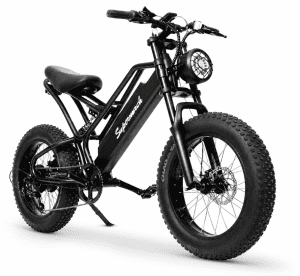
SM26 All Black E-Bike – 750 W / 48 V (15 Ah)
Adult e-bikes combine pedal-driven bicycle mechanics with an electric motor, rechargeable battery, controller, and rider-selected power modes. The result is a bicycle platform that can reduce pedaling effort, support faster everyday travel, and provide additional motor assistance when starting, maintaining speed, or riding under increased load.
The current CarZoneToys Adult E-Bikes collection is built around the SM26 All Black E-Bike, a full-size electric bicycle with a 750W rear hub motor, 48V 15Ah battery, 20-inch wheel platform, and three riding modes. Its electrical system is designed to work alongside conventional bicycle controls rather than replace the basic functions of steering, braking, and rider input.
Motor wattage, battery capacity, wheel size, braking hardware, suspension, riding mode, rider load, terrain, and speed all affect how an adult electric bike performs. A higher motor rating can provide stronger drive assistance, but it does not determine range by itself. Battery energy and riding conditions need to be considered separately.
For commuting, leisure riding, or regular local trips, the useful question is not simply how powerful an e-bike is. The complete electrical and mechanical system should match the distance, road conditions, storage needs, and level of rider assistance required.
750W Rear Hub Motor Architecture and Power Delivery
A rear hub motor places the electric drive unit inside the rear wheel assembly. When the controller sends current from the battery to the motor, electromagnetic force rotates the wheel directly. This removes the need for the electric motor to transfer power through the bicycle’s chain and keeps the electric drive system mechanically separate from normal pedal operation.
The SM26 uses a 750W rear hub motor, giving the current CarZoneToys adult e-bike collection a higher-output drive platform suited to riders who want more assistance than a low-wattage urban e-bike can provide. Higher available motor output can improve acceleration and help the bike maintain movement when resistance increases, although the actual result changes with rider load, gradient, tire pressure, battery charge, and controller programming.
Rear-wheel motor placement also affects traction. Because a large part of the rider’s weight is carried over the rear section of a bicycle, the powered wheel can maintain useful contact with the road during acceleration. This makes rear hub systems common on adult electric bicycles designed around steady everyday power delivery.
Motor wattage should still be treated as one specification within the drivetrain. Gearing, wheel diameter, controller limits, battery voltage, riding mode, and terrain determine how that power feels during actual use.
| Drive Component | Mechanical Role | What It Changes |
|---|---|---|
| 750W rear hub motor | Converts electrical energy into wheel rotation | Provides electric drive assistance |
| Motor controller | Regulates battery current to the motor | Controls power response |
| Rear-wheel placement | Applies drive force at the back wheel | Supports traction under acceleration |
| Bicycle gearing | Changes mechanical pedal ratio | Helps match cadence to speed and terrain |
| Riding-mode control | Changes how electric power is used | Lets the rider alter assistance behavior |
| 20-inch wheel platform | Transfers motor and pedal force to the road | Influences handling and ride response |
48V 15Ah Battery Capacity, Range, and Charging Demand
The battery determines how much electrical energy is available to the drive system. The SM26 uses a 48V 15Ah rechargeable battery, pairing a higher-voltage platform with enough stored capacity to support its 750W motor system.
Voltage and capacity serve different purposes. Voltage defines the electrical operating level supplied to the controller and motor, while amp-hours describe battery charge capacity. Neither number should be used alone to predict exact riding distance.
The manufacturer states a range of up to approximately 25 miles, but real range can change significantly. Higher speeds increase aerodynamic and electrical demand. Frequent acceleration draws more current than steady travel. Hills require additional motor output, while rider weight, tire pressure, surface conditions, temperature, and the amount of pedaling also change energy use.
This is why an advertised range should be treated as a reference rather than a guaranteed distance for every ride.
Charging follows the same system-specific approach. The SM26 manufacturer states an approximate 3–5 hour charging period. The supplied or manufacturer-approved charger should match the battery voltage, charging input, connector, and protection system.
Long-term battery care also matters. Regular charging, correct storage, protection from moisture and extreme temperatures, and avoiding incompatible chargers help preserve usable capacity as the battery moves through repeated charge cycles.
Electric, Assisted, and Pedal Riding Modes
An adult e-bike is most useful when the rider can decide how much work comes from the motor and how much comes from pedaling. The SM26 provides three riding modes, allowing the bicycle to operate with different levels or forms of electric and rider input.
This flexibility changes how the same bike can be used during a trip. Electric drive can reduce physical effort where stronger assistance is wanted. Assisted riding combines rider input with motor support, while conventional cycling preserves the normal bicycle function when electric power is not required.
Mode selection also affects battery consumption. Greater motor use places more demand on the battery, while contributing more pedal effort can reduce electrical demand over the same route. That makes riding mode part of range management rather than simply a comfort setting.
Mechanical gearing remains useful regardless of electric assistance. The SM26 is also listed with a Shimano shifting system, allowing the rider to change pedal resistance and cadence as speed or terrain changes.
The motor and bicycle drivetrain therefore work as two related systems. Electric power supplies assistance, while gearing and pedal input let the rider manage effort mechanically.
| Riding Factor | System Function | Practical Effect |
| Electric drive | Uses motor power for propulsion assistance | Reduces rider effort |
| Assisted riding | Combines pedaling and motor support | Balances effort and battery use |
| Pedal cycling | Uses conventional bicycle input | Preserves normal bicycle operation |
| Gear selection | Changes pedal resistance | Matches cadence to riding conditions |
| Throttle/assist controls | Send rider input to the controller | Regulate electric response |
| Battery charge level | Determines available stored energy | Affects remaining electric assistance |
Braking, Suspension, Lighting, and Rider Control
Motor output is only useful when the bicycle can remain controlled during acceleration, cornering, and stopping. Brakes, tires, suspension, handlebar position, and lighting are therefore part of the performance system rather than secondary accessories.
The SM26 is equipped with a double-clip braking system according to the manufacturer’s current specification. Braking hardware converts the bike’s forward motion into controlled deceleration, allowing the rider to reduce speed independently of the electric motor.
Suspension becomes important when pavement is uneven or the bike crosses road joints, rough paths, or changing surfaces. Current SM26 specifications identify it as a full-suspension e-bike. Suspension allows controlled movement between the wheel assemblies and frame, reducing the amount of surface impact transferred directly to the rider.
The 20-inch wheel setup also influences steering response and overall geometry. Wheel diameter should be considered together with tire width, suspension travel, frame design, and rider position rather than used alone as a measure of comfort.
Front and rear lighting improve visibility when ambient light drops. The SM26 includes a headlamp and taillight, giving the rider forward illumination and a visible rear light source. Lighting does not replace appropriate riding judgement or legally required equipment, but it is an important part of an adult electric bike used beyond bright daytime conditions.
Commuting Efficiency, Road Conditions, and Real-World Range
An adult electric bike should be matched to the route it will actually travel. Smooth paved roads require less energy than steep climbs, repeated stop-and-start traffic, loose surfaces, or underinflated tires. These conditions affect both motor demand and battery consumption.
For commuting, the first figure to compare is the expected round-trip distance. The SM26 carries a manufacturer-stated range of up to approximately 25 miles, so a route should leave suitable battery reserve rather than assume the maximum figure will be available under every condition.
Speed also changes energy use. Riding continuously near the upper end of the bike’s performance range normally consumes more energy than maintaining a moderate pace. The current SM26 specification states speeds of up to 25 mph, but rider load, terrain, battery state, wind, tire pressure, and control settings can change actual speed.
Riders should also distinguish performance capability from legal riding status. E-bike rules can differ by state and local jurisdiction based on factors such as motor output, maximum assisted speed, throttle operation, rider age, and where the bike is being used. A motor or speed specification alone should not be treated as proof that a bike can be used on every public road, trail, or bicycle path.
| Range Factor | Effect on the System | What to Consider |
| Battery capacity | Defines available stored energy | Compare Ah and battery specification |
| Riding speed | Changes power demand | Higher sustained speed can reduce range |
| Rider input | Shares work with the motor | More pedaling can reduce electrical demand |
| Hills | Increase required torque | Expect greater battery use |
| Stop-start riding | Repeats acceleration demand | Can reduce efficiency |
| Tire pressure | Changes rolling resistance | Maintain the specified pressure |
| Rider/load weight | Changes motor workload | Stay within the model’s stated limit |
Frame Fit, Wheel Size, and Everyday Adult Use
Rider fit should be confirmed before choosing an e-bike from motor specifications alone. Handlebar reach, saddle position, frame geometry, pedal access, wheel size, and approved rider capacity determine whether the bicycle can be controlled comfortably.
The SM26 uses a 20-inch wheel platform and is sold as an adult electric bicycle. Its compact wheel diameter is paired with a full-size powered frame rather than the structure of a children’s ride-on vehicle or standing electric scooter. That distinction matters for both entity clarity and actual use: an adult e-bike requires active steering, balance, braking judgement, and bicycle-riding ability.
Storage should also be considered. Electric bicycles carry additional components that normal bicycles do not, including the motor, controller, battery pack, wiring, display or control hardware, and charger. These components add weight and make secure indoor or covered storage more useful.
Routine maintenance should cover both sides of the bike. Traditional bicycle parts require checks for brake condition, tire pressure, wheel alignment, fasteners, and drivetrain wear. The electrical side requires inspection of charging connections, wiring, battery condition, display functions, and motor response.
Keeping these systems maintained together gives a better measure of ownership quality than focusing only on maximum speed.
Choosing an Adult E-Bike by Motor, Battery, and Riding Requirements
The right adult e-bike starts with use case. For local commuting, compare trip distance, road gradient, required speed, storage, and charging access. For leisure riding, consider comfort, suspension, riding position, battery reserve, and how much pedal assistance is actually wanted.
Motor output comes next. A 750W system such as the SM26 provides substantial electric assistance, but stronger output also makes braking quality, rider control, and appropriate riding conditions more important.
Battery specifications should then be read separately. The current SM26 combines a 48V electrical platform with 15Ah capacity. Its manufacturer states up to approximately 25 miles of range and an approximate 3–5 hour charging period, but both riding distance and charge behavior should be considered within real operating conditions.
The braking system, suspension, lighting, wheel size, gearing, and available riding modes complete the mechanical comparison. These features determine how usable the electrical performance becomes once the bike is moving.
CarZoneToys currently offers the SM26 All Black E-Bike – 750W / 48V (15Ah) within its Adult E-Bikes collection. Its rear hub motor, three riding modes, 20-inch wheel platform, suspension, lighting, and rechargeable battery system make it the central model for this category. Review the individual product specifications before ordering to confirm current dimensions, rider limits, included equipment, warranty details, and any specification that may change by production version.