
Electric Trikes
Our Collection / Electric Trikes
Featured Products
Browse hand-picked products from this collection.
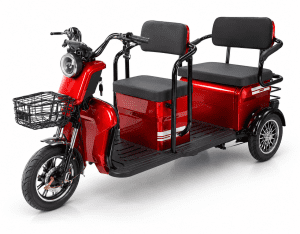
48V Electric Trike – Rickshow
Electric trikes use a three-wheel chassis, rechargeable battery, electric motor, controller, and rider controls to provide stable short-distance electric transport. One front wheel handles steering while two rear wheels create a wider support base and carry much of the vehicle load.
The current CarZoneToys Electric Trikes collection centers on the 48V Electric Trike – Rickshow. Its main specifications include a 48V electrical platform, 1000W motor, large cargo capacity, suspension system, and reverse mode.
This configuration is different from a normal electric bicycle. The rider does not need to balance a two-wheel frame when stopped, and the wider rear section provides more space for load support. However, three wheels do not remove normal handling limits. Speed, cargo position, surface condition, steering input, and total weight still affect stability.
The right electric trike should therefore be selected by its complete setup rather than motor wattage alone. Chassis dimensions, battery capacity, cargo limits, braking, tires, suspension, turning space, charging access, and intended route all matter.
Three-Wheel Chassis Geometry and Low-Speed Stability
A standard electric trike uses one front steering wheel and two rear wheels. This creates three contact points with the ground and allows the vehicle to remain upright when stopped without the rider balancing it like a conventional bicycle.
The front fork and handlebar assembly control direction. When the rider turns the handlebars, the front wheel changes angle while the two rear wheels follow a wider path behind it.
Rear track width is important because it affects side-to-side stability and the amount of space the vehicle needs when passing through gates, parking areas, or narrow routes. Wheelbase also matters. A longer chassis can provide more room for cargo and a steadier straight-line feel, but it normally needs more space to turn.
Weight placement has an equally strong effect on handling. The battery, motor, rider, and cargo all contribute to the vehicle’s center of gravity. Keeping heavy items low and properly positioned helps the trike remain more predictable during acceleration, braking, and turns.
A three-wheel layout should not be treated as impossible to tip. Sharp turns, steep side slopes, uneven cargo, excessive speed, or sudden steering can shift weight toward one side.
| Chassis Factor | Mechanical Role | Practical Effect |
|---|---|---|
| Front wheel | Controls direction | Provides steering |
| Dual rear wheels | Create wider support base | Improves low-speed stability |
| Rear axle | Supports rear structure | Carries drivetrain and load |
| Wheelbase | Sets axle spacing | Affects turning and straight-line control |
| Rear track width | Sets side-to-side wheel spacing | Changes stability and clearance |
| Load position | Changes center of gravity | Affects cornering and braking |
48V Electrical Platform and 1000W Motor Power
The current CarZoneToys electric trike uses a 48V system paired with a 1000W motor. The battery stores electrical energy, while the motor controller manages how much current reaches the motor as the rider uses the throttle.
Voltage and wattage describe different parts of the drivetrain.
The 48V rating identifies the electrical operating platform. The 1000W motor rating describes motor output. Battery capacity is another separate specification because two 48V batteries can hold different amounts of stored energy.
A utility-focused trike needs useful motor output because the drivetrain may need to move the rider, vehicle weight, and cargo at the same time. More load means more resistance during acceleration and hill climbing.
The 1000W rating does not create a fixed top speed or climbing ability. Controller programming, gearing, wheel diameter, battery condition, rider weight, cargo load, and road gradient all affect actual performance.
The controller also changes how the motor feels during use. It regulates current and helps determine throttle response and acceleration. Smooth power delivery is especially useful on a three-wheel utility vehicle because sudden acceleration can shift both rider and cargo weight.
Cargo Capacity and Load Distribution
Cargo capacity is one of the strongest features of the current Electric Trikes collection. The Rickshow is built around a larger rear utility structure rather than a lightweight bicycle rack.
Carrying weight changes how the complete vehicle performs.
Additional cargo increases motor demand during acceleration. It also increases the amount of moving mass the braking system needs to slow down. Tires and suspension carry more load, while battery consumption can rise because the motor needs more energy to move the vehicle.
Cargo placement matters as much as cargo weight.
A low, evenly distributed load generally creates more predictable handling than a tall load or one placed heavily on one side. Items should also be secured so they cannot shift when the trike starts, turns, or stops.
The physical size of the cargo area does not define the maximum payload. A large basket or platform may have enough room for bulky items while still having a specific weight limit.
The manufacturer’s stated load capacity should always control the final decision.
| Load Factor | What It Changes | What to Check |
|---|---|---|
| Cargo weight | Motor and braking demand | Maximum approved payload |
| Load height | Center of gravity | Keep heavy items low |
| Side-to-side balance | Cornering behavior | Distribute weight evenly |
| Total vehicle load | Battery consumption | Stay within rated capacity |
| Cargo movement | Stability during turns | Secure items before riding |
| Route gradient | Motor workload | Consider hills under load |
Suspension, Tires, and Surface Compatibility
The current 48V Electric Trike includes a suspension system, giving the chassis more ability to manage smaller bumps and changes in the riding surface.
Suspension allows controlled movement between parts of the wheel assembly and frame. Instead of every bump transferring directly into the rider and cargo structure, some movement is absorbed through the suspension.
This can improve comfort and help the wheels maintain more consistent surface contact.
Suspension does not mean every terrain is suitable.
Smooth pavement creates less rolling resistance than grass, loose gravel, rough ground, or an incline. Higher resistance makes the 1000W drive system work harder and can reduce available battery range.
Tire design also affects performance. Tire width, tread pattern, pressure, and material determine how well the wheels maintain grip during acceleration, braking, and turning.
Ground clearance should be checked when the route contains bumps or raised surfaces. Electrical or mechanical components mounted beneath the chassis can still make contact with obstacles even when the vehicle has suspension.
A better buying approach is to match the trike to the route rather than assume a three-wheel utility design can handle every surface.
Reverse Mode, Steering, and Tight-Space Maneuvering
Reverse mode is a useful feature on a three-wheel electric trike because the wider rear section can make tight turns more difficult than on a standard bicycle.
The current Rickshow includes reverse functionality, allowing the rider to back out of parking positions or reposition the vehicle where there is not enough room for a full forward turn.
The rider still needs to check rear clearance before reversing. Cargo can reduce visibility, while the two rear wheels occupy more space than the single front wheel.
Turning also requires understanding the rear-wheel path. The front wheel may clear an obstacle while one of the rear wheels passes closer to it during the same turn.
This matters around walls, parked vehicles, narrow gates, storage areas, loading spaces, and other confined routes.
Low-speed throttle control is important in these situations. Small and predictable power inputs are more useful than strong acceleration when positioning a heavier three-wheel vehicle.
Braking performance should also be considered with reverse and steering. The exact brake system should be confirmed from the current product specification before purchase, especially when the vehicle will regularly carry cargo.
Battery Capacity, Range, and Charging
A 48V electrical system does not tell buyers the exact riding range.
Range depends more directly on battery capacity and how quickly the vehicle uses stored energy. Capacity may be listed in amp-hours or watt-hours and should be checked on the exact product record.
Total load has a strong effect on energy use. A lightly loaded electric trike can require less motor power than the same vehicle carrying heavier approved cargo.
Terrain also changes demand. Hills require additional motor output, while grass or rough surfaces create more rolling resistance than smooth pavement.
Repeated acceleration can reduce efficiency as well. A route with frequent stops may use battery energy differently from steady travel over a flat surface.
Temperature, tire pressure, battery age, and braking drag can further change practical range.
Charging should always use the charger specified for the installed battery system. Matching the connector alone is not enough. Voltage, charging output, battery chemistry, polarity, and manufacturer requirements all need to be compatible.
Replacement batteries should follow the same rule.
| Energy Factor | Effect | What to Compare |
|---|---|---|
| 48V voltage | Defines electrical platform | System compatibility |
| Battery capacity | Determines stored energy | Exact Ah or Wh rating |
| 1000W motor | Uses battery energy | Match to vehicle load |
| Cargo weight | Increases energy demand | Normal working load |
| Terrain | Changes rolling resistance | Route conditions |
| Charger | Restores battery energy | Use correct compatible unit |
Rider Fit, Controls, and Everyday Operation
An electric trike needs to fit the operator as well as the route.
The rider should be able to reach the handlebars, throttle, brakes, and reverse controls while remaining in a stable seated position. Foot placement should also allow easy mounting, stopping, and low-speed control.
The wider rear chassis requires more spatial awareness than a normal bicycle. Riders need to judge clearance based on the full vehicle width, not only the handlebars.
Vehicle weight matters when the motor is switched off. A utility electric trike can be harder to push or reposition manually than a lightweight e-bike, especially when loaded.
Storage should therefore be considered before purchase. Door width, garage space, charging location, turning room, and weather protection can all affect daily use.
The same rule applies to additional equipment. Mirrors, lights, indicators, horn systems, parking brakes, displays, seat restraints, or other features should only be treated as included when confirmed on the exact product specification.
The current product should also not automatically be described as a senior mobility trike, pedal-assist bicycle, or passenger vehicle simply because those formats exist elsewhere in the electric-trike market.
Choosing the CarZoneToys 48V Electric Trike
The current CarZoneToys Electric Trikes collection has one clear product entity: the 48V Electric Trike – Rickshow with a 1000W motor, large cargo capacity, suspension system, and reverse mode.
Start by checking the intended load. Determine what will normally be carried and compare that weight with the manufacturer’s stated capacity.
Next, check the route. Smooth pavement, hills, turning space, surface quality, storage width, and charging access can affect whether the trike is practical for daily use.
Then compare the electrical system. The 48V platform and 1000W motor define the main drivetrain, while battery capacity, expected range, charging time, and replacement-battery specifications should be confirmed from the live product record.
Suspension and tires should match the expected surface. Reverse becomes especially useful where parking and turning space are limited.
Rider fit comes next. Handlebar reach, seating position, controls, visibility, and overall vehicle width should allow the operator to manage the trike without awkward movement.
For the current CarZoneToys collection, the strongest buying comparison is therefore built around the real 48V electrical system, 1000W motor, three-wheel chassis, cargo setup, suspension, reverse capability, battery requirements, load distribution, and route conditions rather than unrelated folding, recumbent, senior, or pedal-assist trike formats.