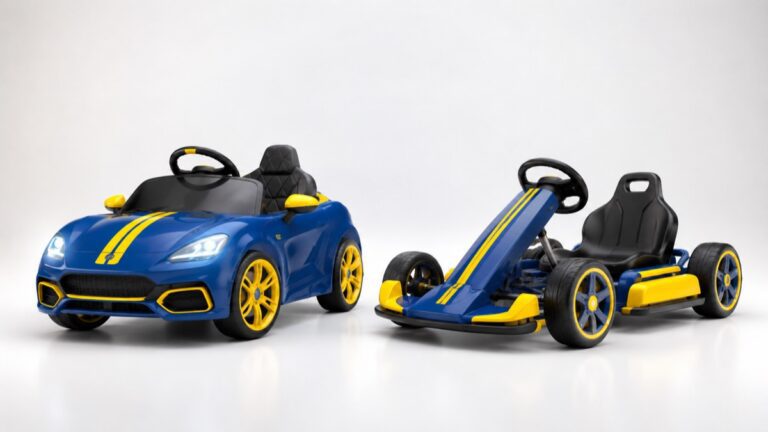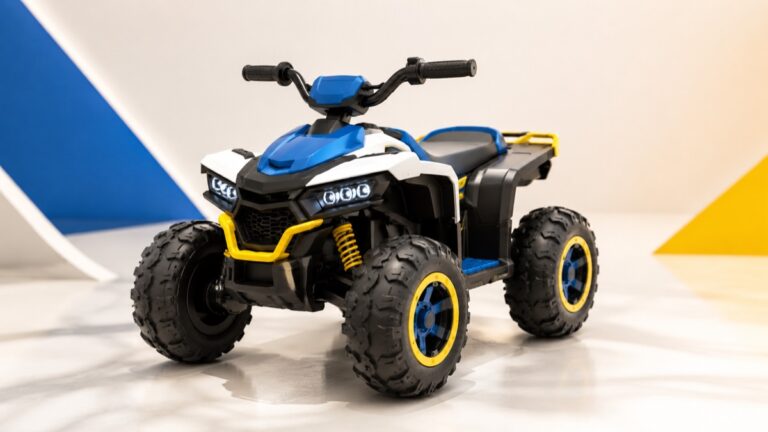
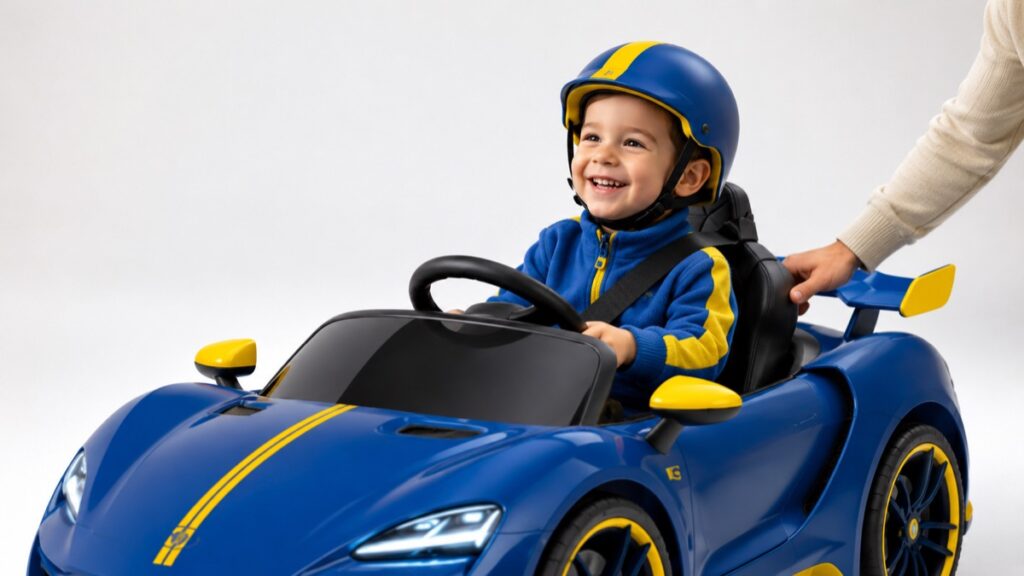
A kids’ ride-on car is safe when it’s matched to the child, set up correctly, and supervised. The biggest safety factors are a parental remote for young riders, adjustable speed limits, seat belts, and choosing a safe place to drive. Here’s a practical checklist parents can actually use.
Before the first ride
- Read the manual and confirm the age and maximum weight limit fit your child.
- Fully charge the battery before first use (see our battery & charging guide).
- Check the assembly — wheels, seat, and steering tight; no loose screws (our assembly guide covers this).
- Set the lowest speed and pair the parental remote before handing over control.
- Fit a helmet for faster models, ATVs, and go-karts.
The features that make a ride-on safer
Parental remote control
For toddlers and preschoolers, this is the single most important feature. It lets you steer and brake for your child and override their input instantly — essential near curbs, driveways, or other people. Learn more in our parental remote guide.
Adjustable speed settings
Being able to cap the top speed lets a new driver build confidence safely, then unlock more speed as their control improves. This matters most when moving a younger child onto a more powerful 24V model.
Seat belts and a stable frame
A belt keeps the child seated during turns and stops, and a wide, low frame resists tipping. Two-seaters should have a belt for each rider.
Soft-start and reliable braking
Soft-start acceleration prevents jerky take-offs, and prompt braking (including remote braking) gives you a way to stop the car quickly.
Where kids should — and shouldn’t — drive
- Best: flat driveways, patios, and enclosed backyards away from traffic.
- With care: short, firm grass and gentle slopes — better suited to grass-capable 24V models.
- Avoid: roads, driveways near the street, pools and ponds, steep hills, wet or icy surfaces, and gravel for low-clearance cars.
Supervision and simple rules
No ride-on replaces adult supervision. Set a few clear rules early: stay where a grown-up can see you, stop when asked, keep hands and feet inside, and one rider per seat. Keep the remote within range whenever a young child is driving.
Ongoing safety checks
- Recharge after use so the car isn’t stored flat, and unplug once charged.
- Check tires, steering, and the seat belt periodically for wear.
- Keep the battery and charger away from water and stored indoors.
- Stop use if the car behaves unexpectedly, and inspect before the next ride.
Frequently asked questions
Are electric ride-on cars safe for toddlers?
Yes, when you use a low-speed 12V model with a parental remote and seat belt, drive in a safe enclosed area, and supervise closely.
Should my child wear a helmet on a ride-on car?
For low-speed 12V cars on flat ground it’s optional but sensible; for faster 24V models, ATVs, and go-karts, a helmet is strongly recommended.
How fast do kids’ ride-on cars go?
It varies by model — many 12V cars stay around walking-to-jogging pace, while 24V models can go faster. Most have adjustable speed settings so you can limit the top speed.
What’s the safest ride-on for a young child?
A 12V single-seat car with a parental remote, adjustable speed, soft-start, and a seat belt, driven on a flat, enclosed surface under supervision.
Shop with safety in mind
Every ride-on at Carzone Toys is chosen with these safeguards in mind — browse 12V cars for younger drivers or the full collection to compare features.
Shopping for Christmas? See our ride-on gift picks by age & budget — order by Dec 5 for shipped delivery, or pick up free in Douglasville, Dawsonville or Stonecrest. Black Friday deals →