“How long will it run before it needs charging?” is one of the most common questions parents ask about ride-on cars — and one of the most misunderstood. Run time isn’t about voltage; it’s about the battery’s capacity and how the car is used. Here’s a clear, practical guide to ride-on batteries, charging, and care.
How long does a ride-on battery last per charge?
As a general rule, expect 40–90 minutes of active play on a full charge. Where a specific model lands depends on four things:
- Battery capacity (amp-hours / Ah). This is the real “fuel tank.” A 7Ah battery runs longer than a 4Ah battery at the same voltage.
- Rider weight. Heavier riders draw more power and shorten run time.
- Terrain. Grass, gravel, and hills drain the battery faster than smooth pavement.
- Driving style. Constant full-throttle uses more than gentle cruising.
Voltage (12V vs 24V) affects speed and power, not run time. A 24V car isn’t automatically shorter-lived — look at the Ah rating to compare battery life.
How long does charging take?
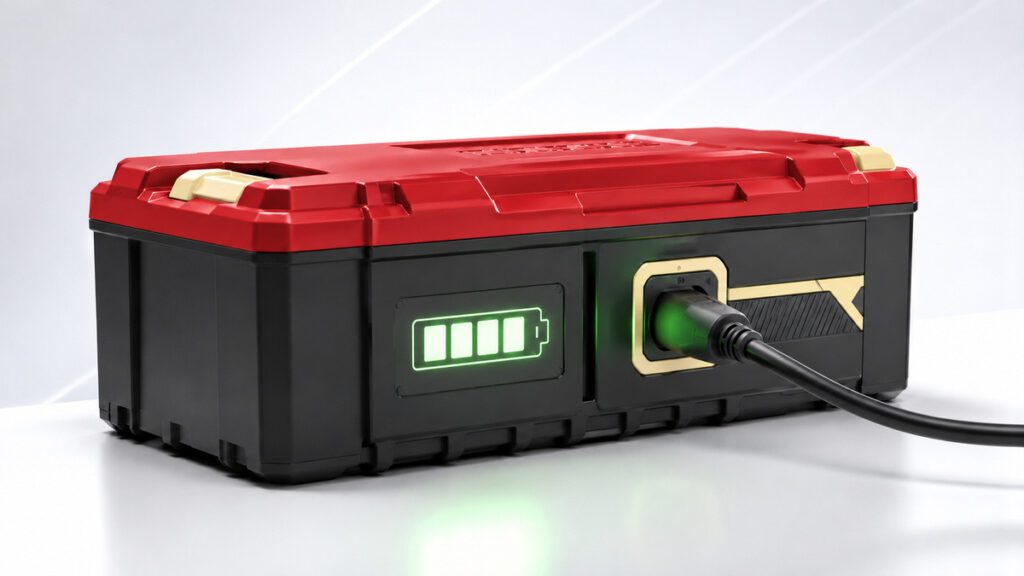
Most ride-on batteries take 8–12 hours for a full charge. A few important habits:
- Charge before first use — new batteries usually ship partially charged and need a full top-up.
- Don’t overcharge. Unplug once charged (or within the time the manual states). Leaving it on the charger for days shortens battery life.
- Don’t run it completely flat repeatedly — recharge when you notice the car slowing down.
Making the battery last for years
- Recharge after every use, even short ones, so it’s never stored empty.
- Charge every 1–2 months during storage (e.g., over winter) to prevent the battery from dying.
- Store indoors at room temperature — extreme heat and cold both harm batteries.
- Expect a well-cared-for battery to last 1–3 years before it needs replacing.
Want longer play sessions?
Two easy options: choose a model with a higher-Ah battery, or keep a spare battery charged and swap it in. If your child rides in long stretches or on grass, this makes a big difference.
Replacing a ride-on battery
When run time drops sharply even after a full charge, the battery is near the end of its life. Replacements are widely available by voltage and connector type — match the original’s specs (voltage and Ah) for the best results.
Frequently asked questions
Does a 24V car have worse battery life than a 12V?
Not necessarily. Run time depends on the battery’s amp-hour rating and how the car is used, not voltage alone. Compare Ah ratings to judge battery life.
Can I leave the ride-on on charge overnight?
Follow the manual’s stated charge time (usually 8–12 hours) and avoid leaving it plugged in for days. Overcharging shortens battery life.
Why is my ride-on suddenly slower?
Usually a low or aging battery. Try a full charge first; if it’s still slow, the battery may need replacing.
How do I store the battery over winter?
Charge it fully, store the car indoors at room temperature, and top the battery up every 1–2 months so it doesn’t fully discharge.
Shop ride-ons built to last
Explore our lineup at Carzone Toys — fast, free U.S. shipping from Douglasville, GA: 12V cars, 24V cars, and the full collection.
Shopping for Christmas? See our ride-on gift picks by age & budget — order by Dec 5 for shipped delivery, or pick up free in Douglasville, Dawsonville or Stonecrest. Black Friday deals →