Ride-On Jeeps and Trucks
Our Collection / Ride-On Jeeps And Trucks
Featured Products
Browse hand-picked products from this collection.
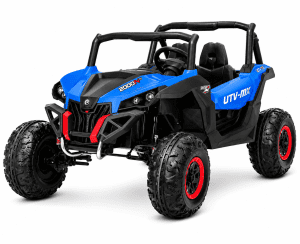
24V Utv-Mx Ride-On Jeep
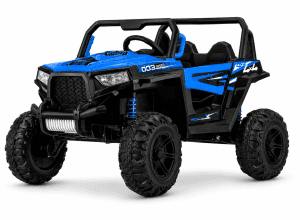
12V Polaris Ride-On Jeep
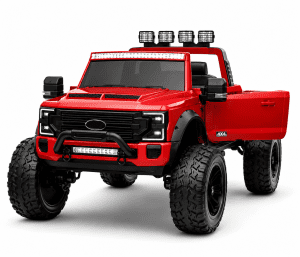
24V Ford Truck
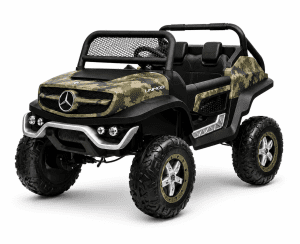
12V Mercedes Unimog Ride-On Jeep
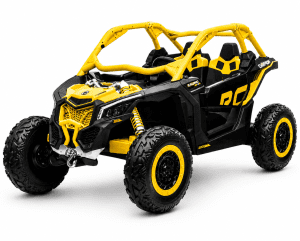
48V Can-Am Ride-on Jeep
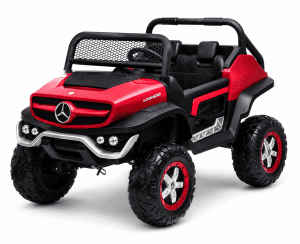
24V Mercedes Unimog Ride-On Jeep
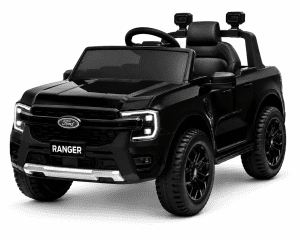
12V Ford Ranger Ride-On Jeep
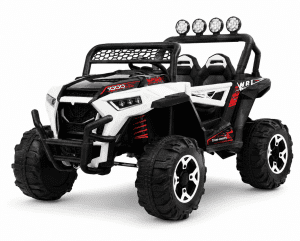
12V – 928 Ride-On Jeep
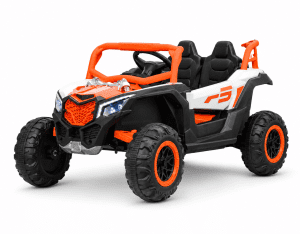
12V – Mini UTV Ride-On Jeep
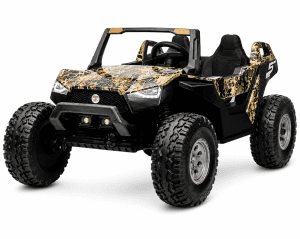
24V – 1928 4X4 UTV Clash
Ride-on Jeeps and trucks combine a battery-powered drivetrain with a wider vehicle body, raised seating position, larger wheel layout, and SUV- or utility-inspired styling. Compared with low-profile ride-on cars, these models place more emphasis on ground clearance, traction, cabin space, and controlled outdoor driving.
The current CarZoneToys collection includes 10 Ride-On Jeep models, with 12V and 24V electrical platforms forming the main power classes. Current inventory includes models such as the 24V 2588 Spider Ride-On Jeep, while CarZoneToys also features 24V 4×4 Jeep-style platforms built for outdoor riding.
Voltage is only one part of the comparison. Motor configuration, battery capacity, wheel construction, suspension, ground clearance, rider load, parental remote control, seat layout, and the intended riding surface determine how a Jeep or truck actually performs.
For driveways, lawns, firm outdoor paths, and suitable backyard terrain, the right ride-on should be selected by matching the complete chassis and drivetrain to the child rather than choosing from body size or voltage alone.
Wide Chassis, Wheelbase, and SUV-Style Ride-On Architecture
Ride-on Jeeps and trucks generally use wider, taller bodies than sports-car-style ride-ons. The body shell gives the vehicle its Jeep, SUV, pickup, or utility appearance, while the structural base supports the battery, motors, seats, steering assembly, suspension, and wheel system.
A wider wheel track can improve low-speed stability by spreading the vehicle’s contact points farther apart. Wheelbase also affects handling. A longer platform can provide more cabin space and steadier straight-line movement, while a shorter wheelbase can require less room when turning.
Seat placement influences balance as well. The battery and rider mass usually sit relatively low within the vehicle compared with the top of the body shell. Keeping more weight lower in the chassis helps reduce unnecessary body movement during normal turns.
The steering wheel operates the front steering assembly through mechanical linkage. When the child turns the wheel, the front tires change direction while the powered wheels continue providing drive force.
Large body dimensions do not automatically mean greater rider capacity. A Jeep may look wide enough for two children while still being rated as a single-seater. Passenger count, seat width, and maximum rider weight must always come from the exact product specification.
| Chassis Factor | Mechanical Role | Buying Impact |
|---|---|---|
| Wide wheel track | Spreads wheel contact | Supports stable low-speed handling |
| Wheelbase | Sets axle spacing | Changes cabin room and turning behavior |
| Steering linkage | Controls front-wheel angle | Provides directional control |
| Seat position | Places rider load | Affects weight balance |
| Body shell | Creates Jeep or truck form | Defines cabin and exterior design |
| Structural frame | Supports drivetrain and riders | Determines approved load capability |
12V and 24V Battery Systems and Motor Performance
CarZoneToys separates its ride-on power platforms mainly between 12V and 24V systems. These voltage classes support different motor configurations, but voltage should not be treated as a complete performance rating.
A 12V ride-on Jeep can provide controlled everyday driving when paired with motors and gearing suited to the vehicle’s weight. These models can work well for younger riders and smoother surfaces when the individual age, weight, and terrain specifications are a match.
A 24V ride-on Jeep provides a higher-voltage electrical platform that can support stronger motor configurations. This becomes useful on larger vehicles where the drivetrain needs to move more chassis weight or maintain better response across grass and mild surface resistance.
The current 2588 Spider Ride-On Jeep uses a 24V platform, placing it within this higher-output part of the collection.
Motor count also matters. A dual-motor or multi-motor vehicle can distribute drive force across more than one wheel, while a single-motor system concentrates its output through one driven wheel or axle arrangement.
Battery capacity must be considered separately. Two vehicles can both use 24V systems but provide different ride duration if their amp-hour capacities, motor demand, vehicle weight, or driving conditions differ.
Higher voltage therefore means more available electrical potential for the drivetrain, not guaranteed longer runtime, greater rider capacity, or a fixed top speed.
Traction Tires, Suspension, and Ground Clearance
A Jeep-shaped ride-on only gains useful outdoor ability when its tires and drivetrain can transfer power to the ground.
Grass creates more rolling resistance than smooth pavement. Gravel can reduce tire grip. Small inclines increase the amount of torque required from the motors. These conditions make wheel design, motor output, suspension, and vehicle weight important.
Wider or treaded wheels can provide more useful surface contact than narrow smooth wheels. EVA, rubberized, or other wheel materials may also produce different levels of vibration control and grip depending on the product.
Suspension manages another part of the ride. Spring-equipped wheel assemblies can move with smaller bumps and surface changes instead of transferring every movement directly into the seat and chassis.
Ground clearance determines how much space remains underneath the vehicle. A Jeep or truck body may sit higher than a sports-style ride-on, but the battery housing, gearbox, motor assembly, or other components underneath still need enough clearance for the intended surface.
This is why appearance alone should not determine whether a vehicle is described as off-road capable.
| Terrain Feature | Mechanical Effect | What to Compare |
|---|---|---|
| Grass | Adds rolling resistance | Motor output and tire grip |
| Small inclines | Increase torque demand | Drivetrain configuration |
| Tire tread | Controls surface contact | Intended terrain |
| Suspension | Manages wheel movement | Comfort on uneven surfaces |
| Ground clearance | Creates underside space | Surface obstacles |
| Rider weight | Adds drivetrain load | Product-specific capacity |
Parental Remote Control, Speed Modes, and Soft-Start Systems
Parental remote control gives an adult a second control path on compatible ride-on Jeeps and trucks. The handheld transmitter communicates with a receiver or controller inside the vehicle, allowing the adult to manage functions such as steering, speed, or stopping depending on the model.
This feature is most useful when a younger rider is still learning how pedal input, steering direction, and stopping distance work together.
Remote control should not be assumed across every Jeep in the collection. The exact product page should state whether parental control is included and which functions the remote can manage.
Speed settings provide another way to match the drivetrain to rider experience. A lower mode gives the child more time to react to turns and obstacles, while a higher setting makes more of the vehicle’s programmed performance available once the rider has developed better control.
Soft-start electronics can also improve low-speed handling. Instead of applying motor output abruptly when the pedal is pressed, the controller increases power more gradually.
Seat belts or other restraints help keep the child in the intended seating position as the vehicle starts, stops, and turns. These features work best when combined with the correct seat fit, rider weight, and adult supervision.
Single-Seater, Two-Seater, and Rider-Fit Requirements
Ride-on Jeep and truck bodies can vary significantly in cabin size.
Single-seat platforms place one rider within the center of the cabin and normally use a more compact seating area. Two-seat models require greater internal width and a chassis designed for the combined rider load.
A large exterior body does not prove that a Jeep is a true two-seater. The approved passenger count needs to come from the manufacturer.
The same applies to maximum weight. A 24V electrical system does not automatically mean the vehicle supports heavier riders. Chassis structure, axle design, suspension, seat frame, wheels, and brakes all contribute to the stated capacity.
Before purchasing, compare the child’s size with seat width, legroom, steering-wheel reach, pedal position, and manufacturer guidance.
The rider should be able to sit naturally while reaching the wheel and accelerator without leaning far forward. In a two-seat configuration, both riders should remain within the approved passenger and combined-weight limits.
For families specifically looking for shared riding, seat count should therefore be checked before styling, audio, lights, or other decorative features.
Battery Capacity, Runtime, and Model-Specific Charging
Battery runtime should not be estimated from 12V or 24V alone.
CarZoneToys’ own battery guidance explains that ride duration depends more directly on battery capacity in amp-hours, rider weight, terrain, and driving style. Grass and hills place more demand on the motors than smooth pavement, while repeated full acceleration can consume energy faster than gentle driving.
A 24V ride-on can therefore have shorter, similar, or longer runtime than a 12V model depending on the actual battery and vehicle configuration.
Charging should also be model-specific.
A charger needs to match the installed battery system, required output, connector, and manufacturer specification. A charger should not be described as safe merely because it is marketed as “universal” or because its plug physically fits the vehicle.
CarZoneToys currently advises that many ride-on batteries require roughly 8–12 hours for a full charge, while the exact manual should control the final charging time.
After use, the battery should be recharged according to the manufacturer’s instructions rather than repeatedly stored in a deeply discharged state. Long storage periods also require battery maintenance to prevent capacity loss.
| Battery Factor | What It Means | Ownership Impact |
|---|---|---|
| Voltage | Electrical system class | Must match vehicle components |
| Amp-hour capacity | Available stored charge | Strong influence on runtime |
| Motor demand | Rate of energy use | Changes battery drain |
| Rider load | Mass being moved | Higher load uses more energy |
| Terrain | Drivetrain resistance | Grass and slopes increase demand |
| Charger specification | Battery recharge requirements | Must match the exact system |
Licensed Styling, Jeep Bodies, and Utility Truck Design
Ride-on Jeeps and trucks can use licensed or unlicensed body designs.
Licensed vehicles reproduce approved styling, badges, grille shapes, lights, and other recognizable details from real automotive brands. Unlicensed vehicles use Jeep-, SUV-, UTV-, or truck-inspired body shapes without representing an official real-world model.
CarZoneToys’ own licensing guide makes an important distinction: licensing does not automatically improve performance. Battery voltage, motors, tires, suspension, rider fit, and control features determine how the vehicle drives.
This means a licensed Jeep should be chosen for authentic styling only after the technical setup matches the child.
Utility-style bodies can also provide taller doors, wider cabins, raised hoods, open-side UTV designs, rear storage areas, or aggressive off-road styling depending on the model.
Current CarZoneToys examples include the 24V 2588 Spider Ride-On Jeep and a 24V electric 4×4 Rocky Jeep-style vehicle, showing the collection’s stronger relationship with rugged SUV and utility body formats.
Lights, music, dashboards, horns, device connections, and molded exterior details can improve the play experience, but these should remain secondary to drivetrain, seat capacity, remote control, tires, and rider limits.
Choosing the Right Ride-On Jeep or Truck
Start with the rider rather than the voltage badge.
Confirm the manufacturer’s recommended rider age, weight capacity, passenger count, and seat dimensions. Then decide where the vehicle will normally be driven.
For smoother driveways and firm paths, a properly sized 12V Jeep can provide enough controlled movement without unnecessary drivetrain output.
For grass, larger chassis designs, or conditions that create more rolling resistance, a 24V model with a suitable motor configuration, tires, and suspension may be the better match.
Next, compare parental controls. Remote override, selectable speed modes, soft-start electronics, and restraints are useful when a child is still developing steering and pedal skills.
Then check the wheels and chassis. Tire material, tread, ground clearance, suspension, and vehicle dimensions determine whether the Jeep or truck suits the intended surface.
Battery capacity should be checked separately from voltage. Compare the exact Ah rating, stated runtime, charging requirements, and replacement-battery compatibility.
Finally, choose body style and entertainment features.
The strongest Ride-On Jeep or Truck is not automatically the biggest model or the one with the highest voltage. It is the one whose rider fit, battery system, motor configuration, tires, suspension, parental control, seat layout, and riding surface match how the vehicle will actually be used.