Go Karts (Single And Two Seater)
Our Collection / Go Karts (Single And Two Seater)
Featured Products
Browse hand-picked products from this collection.
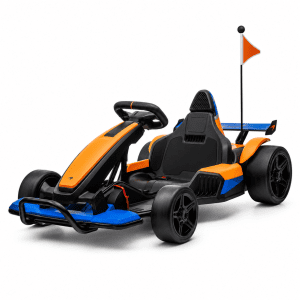
McLaren 24V Electric Drifting Go-Kart for Kids
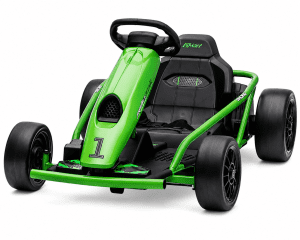
24V Drifting Gokart
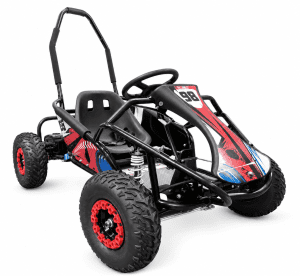
48V 1000W Single Seat Electric Go kart Full Suspension
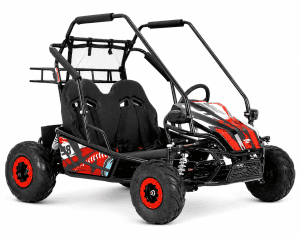
60V 2000W Twin Seater Electric Go Kart Full Suspension
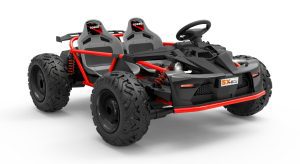
48V Twin Seater GoKart
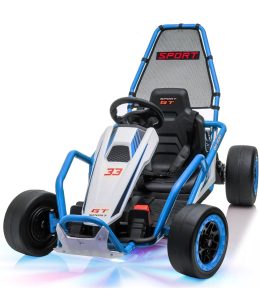
24V Drift Kids Go-Kart
Electric go karts use a low chassis, rechargeable battery, electric drivetrain, direct steering, and dedicated seating position to create a different driving experience from standard ride-on cars. The current CarZoneToys collection covers both single-seater and two-seater go karts, with electrical platforms ranging from 24V kids drift models to higher-output 48V and 60V configurations.
The range currently includes the McLaren 24V Electric Drifting Go-Kart for Kids, 24V Drifting Gokart, 48V 1000W Single Seat Electric Go Kart, 60V 2000W Twin Seater Electric Go Kart, 48V Twin Seater GoKart, and 24V Drift Kids Go-Kart.
These models are not interchangeable. A drift kart needs controlled rear-wheel slip on a suitable hard surface, while an off-road-style kart needs traction, suspension, and tires that maintain contact on less even ground. Passenger count changes chassis load as well, making seat layout, rider limits, suspension, braking, and motor output important parts of the buying decision.
The correct kart should therefore be chosen by rider fit, seat count, intended surface, power system, speed control, braking, and tire setup rather than voltage or appearance alone.
Single-Seat and Twin-Seat Chassis Architecture
Seat count changes the mechanical requirements of an electric go kart. A single-seater places one rider near the centerline of the chassis, while a twin-seater must support two seating positions and distribute the combined load across a wider or longer frame.
CarZoneToys currently carries both configurations. The 48V 1000W model uses a single-seat layout with an adjustable seat system, while the 48V and 60V twin-seater models are designed around two-rider chassis configurations.
A longer twin-seat frame does more than create extra cabin space. Additional rider weight affects acceleration, braking demand, suspension load, and battery consumption. This makes the manufacturer’s approved passenger and weight limits more important than simply checking whether two riders physically fit in the seats.
Steering geometry also changes with chassis dimensions. Wheelbase, front track, steering angle, seat position, and rear axle layout determine how quickly the kart responds when the wheel is turned.
Adjustable seating is useful where fitted because the rider needs to reach the steering wheel, accelerator, and brake controls without stretching. The seat should position the driver securely while leaving enough legroom for full pedal operation.
| Chassis Factor | Mechanical Role | Buying Impact |
|---|---|---|
| Single seat | Centers one rider | Compact driver-focused layout |
| Twin seats | Carry two riders | Requires greater load support |
| Wheelbase | Sets axle spacing | Affects turning and stability |
| Adjustable seat | Changes driver position | Improves pedal and steering reach |
| Frame structure | Supports drivetrain and riders | Defines structural capacity |
| Restraint system | Holds rider in position | Supports controlled operation |
24V, 48V, and 60V Electric Drive Systems
Voltage identifies the electrical operating platform, but it does not provide a complete performance rating. Motor wattage, controller programming, gearing, battery capacity, vehicle weight, tires, and rider load determine how electrical energy becomes usable movement.
The current collection covers three main voltage levels.
The 24V Drift Kids Go-Kart uses dual 200W motors, giving it a combined dual-motor drive arrangement with two selectable speed settings. Its current CarZoneToys specification lists a maximum speed of up to approximately 8.5 mph.
The 48V 1000W Single Seat Electric Go Kart moves into a stronger performance class and pairs its electrical platform with full suspension and off-road tires. The current collection also includes a 48V Twin Seater GoKart built around inflatable off-road tires, heavy-duty suspension, and adjustable seating.
At the upper end of the current collection, the 60V 2000W Twin Seater Electric Go Kart is presented with dual-wheel drive, hydraulic braking, and full suspension.
Higher voltage or motor wattage should not automatically be translated into a fixed top speed. Controller limits, gearing, wheel diameter, load, terrain, and battery condition still determine final performance.
Drift Tire Systems and Controlled Rear-Wheel Slip
Drift go karts intentionally use a different traction balance from normal driving karts. Instead of maximizing rear-wheel grip at all times, the rear setup allows controlled lateral movement when steering and motor input create enough force to overcome available traction.
The CarZoneToys collection currently contains several drift-focused models, including the McLaren 24V Electric Drifting Go-Kart, 24V Drifting Gokart, and 24V Drift Kids Go-Kart.
The 24V Drift Kids Go-Kart combines standard driving and drift modes. Its EVA front wheels provide steering contact while the rear setup allows the kart to change from normal forward driving to controlled sliding on a suitable surface. CarZoneToys recommends smooth pavement as the preferred surface for controlled drifting.
A licensed McLaren 24V drift platform uses the same basic principle: higher-grip front wheels establish steering direction while smoother rear drift wheels reduce lateral grip. This type of setup works best on dry asphalt or smooth concrete rather than grass, mud, loose gravel, or wet pavement.
Drifting also requires more clear space than straight driving. The rear of the kart moves sideways through the turn, so parked vehicles, curbs, walls, pools, steps, and other fixed obstacles should remain well outside the riding area.
Off-Road Tires, Full Suspension, and Surface Traction
The higher-output go karts in the collection use a different surface strategy from the 24V drift models.
The 48V 1000W Single Seat Electric Go Kart is listed with full suspension and off-road tires, while the 48V Twin Seater GoKart uses inflatable off-road tires and heavy-duty suspension. The current 60V 2000W Twin Seater also uses a full-suspension architecture.
Off-road tires are designed to preserve more usable grip where the surface is less uniform. Tire tread, width, pressure, sidewall construction, and wheel diameter all influence how effectively motor force reaches the ground.
Suspension works separately from tire grip. It allows controlled wheel and chassis movement when the kart crosses smaller bumps or surface changes. This can reduce harsh movement reaching the seat while helping the tires remain in contact with the surface.
Neither feature means every type of rough terrain is suitable. Deep mud, large rocks, standing water, severe slopes, and highly uneven ground can exceed the limits of an electric recreational go kart even when the product uses off-road tires.
Surface choice should therefore follow the exact model. Drift tires belong on smooth, dry hard surfaces, while off-road tire and suspension setups are more appropriate where additional traction and surface movement need to be managed.
| Kart Setup | Main Tire Requirement | Better-Matched Use |
|---|---|---|
| Drift kart | Reduced rear lateral grip | Dry pavement and smooth concrete |
| Standard kids kart | Predictable steering grip | Driveways and firm surfaces |
| Off-road single seater | Higher-traction tires | Suitable outdoor terrain |
| Twin-seat off-road kart | Load-supporting tire setup | Firm mixed surfaces |
| Full-suspension kart | Controlled wheel movement | Uneven but appropriate ground |
Braking, Steering, Speed Modes, and Driver Control
Motor output becomes useful only when steering and braking can control it.
The current collection spans several control levels. The 24V Drift Kids Go-Kart provides low and high speed settings, allowing the rider to learn steering and stopping behavior before using the higher programmed setting. Its listed braking system uses automatic braking.
Higher-output models require braking hardware matched to their weight and performance. The current 60V twin-seater is specifically presented with hydraulic braking, making stopping-system design one of its important differentiating attributes.
Direct steering connects driver input at the steering wheel to the front wheels. Steering response then depends on wheel alignment, front geometry, tire grip, wheelbase, and vehicle speed.
Drift driving adds another control variable because steering direction and rear-wheel movement are not always perfectly aligned. A rider needs enough space and skill to recover from a slide without making a sudden correction.
Two riders change control requirements again. Extra passenger mass affects acceleration and stopping distance, so a twin-seat kart should be operated within its stated load limits rather than compared directly with a lighter single-seater.
Seat belts or restraints, where fitted, help maintain the intended seating position during acceleration, braking, and cornering. They should be used with the correct seat adjustment and rider fit.
Battery Capacity, Runtime, and Charging
Voltage alone does not determine how long an electric go kart can operate. Battery capacity, combined motor demand, rider weight, speed setting, terrain, tire resistance, temperature, and driving style all affect runtime.
The current 24V Drift Kids Go-Kart uses a 24V 7Ah battery, with CarZoneToys listing approximately 45–60 minutes of average runtime under normal conditions. That figure should not be applied to every other kart in the collection because their batteries, motors, weights, and operating conditions differ.
Drifting can change energy demand because repeated acceleration and rear-wheel slip use the drivetrain differently from steady forward driving. Off-road surfaces can also consume more energy because grass and uneven terrain create greater rolling resistance than smooth pavement.
Twin-seat models carry more potential rider mass, which can further increase motor demand.
Charging should always use the charger specified for the exact battery system. A 24V charger should not be assumed compatible with a 48V or 60V kart, and connector fit alone does not prove electrical compatibility.
Battery replacement also needs to match voltage, required capacity, chemistry, connector layout, dimensions, polarity, and manufacturer requirements.
| Energy Factor | What It Changes | What to Compare |
|---|---|---|
| Voltage | Electrical system class | 24V, 48V or 60V |
| Battery capacity | Stored energy | Exact Ah/Wh specification |
| Motor output | Electrical demand | Model-specific wattage |
| Passenger load | Total mass moved | Stated rider capacity |
| Terrain | Rolling resistance | Drift surface vs outdoor terrain |
| Driving style | Power consumption | Steady driving vs repeated acceleration |
Choosing the Right Single or Two-Seater Go Kart
The current CarZoneToys range should be selected first by rider count and riding style.
For younger riders who want controlled drifting, the 24V Drift Kids Go-Kart provides dual 200W motors, two speed settings, standard and drift modes, rear suspension, a reinforced metal frame, seat belt, and an up-to-8.5-mph listed maximum speed.
The McLaren 24V Electric Drifting Go-Kart adds licensed McLaren styling to a dual-motor drift platform with an adjustable seat belt and dedicated drift setup. The 24V Drifting Gokart provides another dual-motor drift configuration, with the current collection presenting an approximately 8–12 mph performance range.
For one rider who needs a stronger outdoor-oriented chassis, the 48V 1000W Single Seat Electric Go Kart combines higher motor output with full suspension, off-road tires, and adjustable seating.
Two-rider use shifts the comparison toward the 48V Twin Seater GoKart and 60V 2000W Twin Seater Electric Go Kart. The 48V model emphasizes inflatable off-road tires, heavy-duty suspension, and adjustable seating, while the current 60V model adds higher stated output, dual-wheel drive, hydraulic braking, and full suspension.
The best choice is therefore not simply the kart with the largest voltage number. Match seat count, rider size, motor system, speed controls, brakes, tire type, suspension, intended surface, battery, and available riding space to the people who will actually use it.