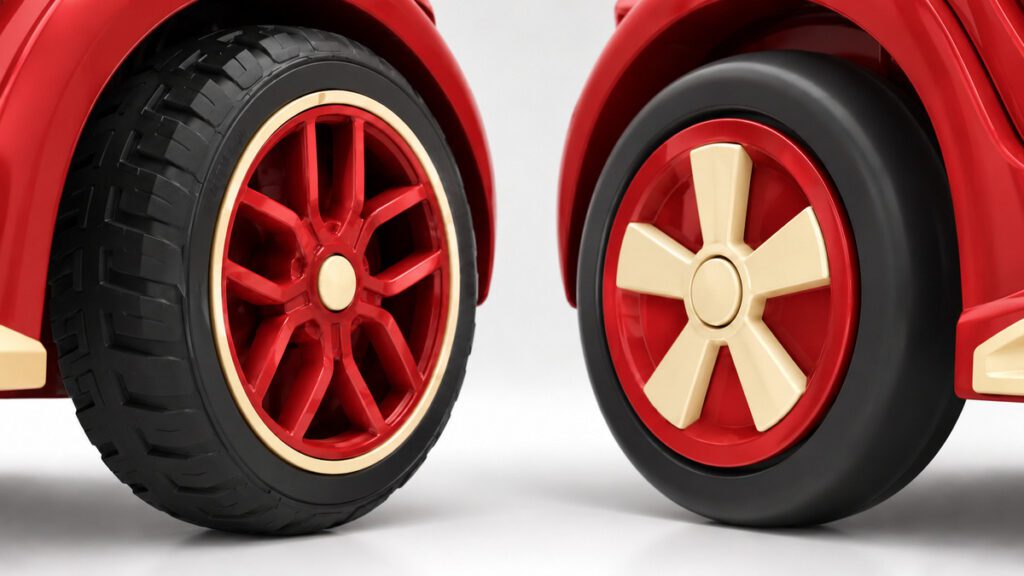
On kids’ ride-on cars, rubber (often EVA) tires grip better, run quieter, and handle grass and bumps more comfortably, while hard plastic wheels are lighter, cheaper, and fine on smooth surfaces. If your child will ride mostly on a lawn or rough ground, rubber-style tires are worth prioritizing. Here’s the full comparison.
The two wheel types explained
Most ride-ons use one of two wheel styles. Hard plastic wheels are a single molded piece — durable and inexpensive. Rubber or EVA tires add a softer, grippier outer layer (sometimes with tread), which behaves more like a real tire. A few larger models use air-filled (pneumatic) tires for even more cushioning.
Rubber vs plastic at a glance
| Rubber / EVA tires | Hard plastic wheels | |
|---|---|---|
| Grip | Better, especially on grass | Slippery on anything but smooth ground |
| Noise | Quieter | Louder on hard floors |
| Ride comfort | Softer over bumps | Firmer, more vibration |
| Cost | Usually higher | Budget-friendly |
| Best for | Grass, driveways, mixed ground | Smooth patios and indoors |
Why grip matters so much
Grip is the single biggest reason parents notice a difference. On a smooth driveway, plastic wheels are fine. On grass, they spin and the car bogs down, while treaded rubber tires bite in and keep moving. If grass is part of the plan, this is the deciding factor — see our best ride-ons for grass guide.
Noise and ride comfort
Rubber tires are noticeably quieter on hard surfaces and absorb small bumps, which makes for a smoother, less rattly ride. Plastic wheels transmit more vibration and can be loud on concrete or indoor floors — worth considering if the car will be used inside or on a patio near the house.
Durability and maintenance
Both types are durable when used as intended. Plastic wheels shrug off abuse but wear smoother over time on rough ground. Rubber/EVA tires handle varied surfaces well; just clear grass and debris from the axles occasionally, as covered in our maintenance guide.
Which should you choose?
- Mostly smooth driveway or patio, budget-friendly: plastic wheels are fine.
- Grass, gravel, or bumpy ground: choose rubber/EVA tires.
- Quieter ride or indoor use: rubber tires.
- Rougher, larger yards: look at models with big treaded tires, such as jeeps and trucks or ATVs.
Tire type pairs with power: for grass you generally want both rubber tires and enough voltage, which our 12V vs 24V guide explains.
Frequently asked questions
Are rubber tires better than plastic wheels on a ride-on car?
For grip, quietness, and comfort on grass or bumps, yes. On smooth surfaces, plastic wheels perform fine and cost less.
What are EVA tires?
EVA is a soft foam-like material used to give ride-on wheels a rubber-like outer layer — more grip and cushioning than hard plastic, without needing air.
Do plastic wheels work on grass?
Only on short, firm grass, and slowly. Thick or damp grass will cause them to slip. For regular grass use, choose rubber/EVA tires.
Are rubber tires quieter indoors?
Yes — rubber and EVA tires are noticeably quieter on hard floors than plastic wheels, which is helpful for indoor or patio use.
Find the right tires
Compare wheel types across models at Carzone Toys — 12V cars, 24V cars, and the full collection.
Shopping for Christmas? See our ride-on gift picks by age & budget — order by Dec 5 for shipped delivery, or pick up free in Douglasville, Dawsonville or Stonecrest. Black Friday deals →