Most 12V ride-on cars suit children aged roughly 2 to 5, while more powerful 24V models are generally aimed at 5 to 9+. But age is only a starting point — a child’s size, coordination, and where they’ll drive matter just as much. This guide explains how to match a ride-on to the actual child, not just a number on the box.
Why age ranges are only a guide
Manufacturers print an age range, but two children of the same age can be very different in height, weight, and confidence. The three things that really decide the right fit are the rider’s weight versus the car’s weight limit, whether they can reach the pedal and steering comfortably, and how much control they have. A cautious three-year-old and an adventurous five-year-old may need very different vehicles.
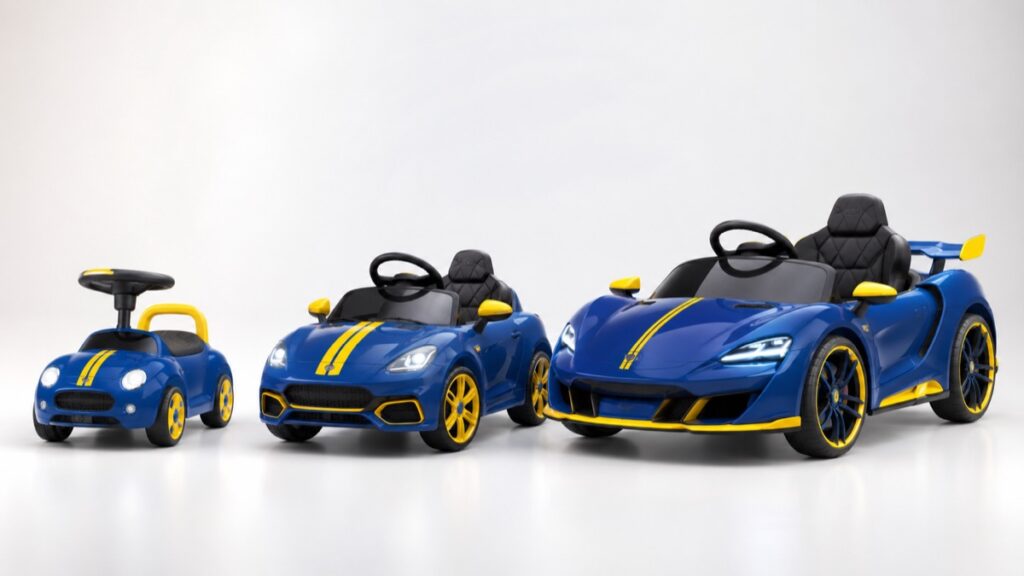
Ride-on cars by age
| Age | Typical fit | What to look for |
|---|---|---|
| 1–2 years | Push cars & strollers | Parent-pushed, high back support, no pedals |
| 2–4 years | 12V single-seat cars | Low speed, parental remote, simple controls |
| 4–6 years | 12V or entry 24V | Adjustable speed, seat belt, remote for younger kids |
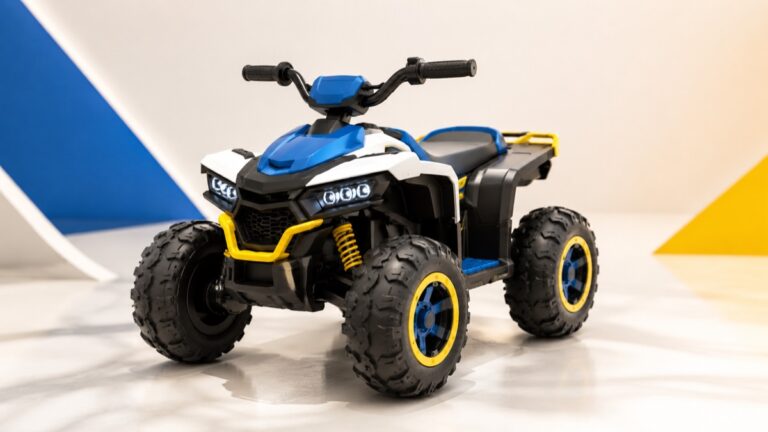
| 6–9+ years | 24V cars, jeeps, ATVs | More power, rubber tires, higher weight limit |
Check weight, not just age
Every ride-on has a maximum rider weight. If a child is near or over that limit, the car will feel slow, drain its battery quickly, and strain the motors — regardless of their age. Always compare your child’s weight to the model’s stated limit, and if two kids will ride together, add both weights and look at a two-seater built for the load.
Younger children: keep control in your hands
For toddlers and preschoolers who are still learning to steer, a model with a parental remote is the most important feature. It lets you steer, accelerate, and brake for them, so they can enjoy “driving” long before they can truly do it alone. Adjustable speed settings let you start slow and unlock more as they’re ready.
Older or more confident kids: room to grow
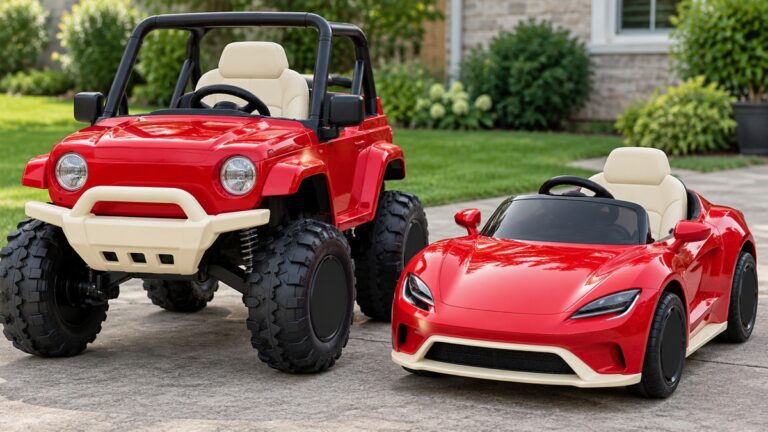
Children around five and up often outgrow a 12V car quickly. Stepping up to a 24V model — or a jeep or ATV — gives more speed, better performance on grass and slopes, and a higher weight limit, so the ride-on stays fun for more years. For a full breakdown of the power difference, see our 12V vs 24V guide.
Match the car to your space too
Age and size aside, think about where it’ll be driven. A younger child on a smooth driveway is well served by a compact 12V car; an older child on a lawn needs the traction of a 24V model or ATV. Our guide to the best ride-ons for grass covers this in detail.
Frequently asked questions
What age is a 12V ride-on car for?
Generally children aged about 2 to 5, though it depends on the child’s size and the model’s weight limit. Younger toddlers do better with a push car; older or heavier kids often prefer 24V.
What age is a 24V ride-on car for?
Usually 5 years and up, including heavier children and those who want more speed or off-road ability. Use the parental remote and lowest speed setting when a younger child rides one.
Is my child too big for a ride-on car?
Check the model’s maximum rider weight rather than age. If your child is at or above it, choose a larger, higher-capacity model such as a 24V car, jeep, or ATV.
Can a 2-year-old use a ride-on car?
Yes, with a low-speed 12V model and a parental remote, or a parent-pushed push car for very young toddlers. Always supervise and keep the speed low.
Find the right fit
Browse by power and size at Carzone Toys — 12V ride-on cars for younger children, 24V ride-on cars for older kids, or the full collection.
Shopping for Christmas? See our ride-on gift picks by age & budget — order by Dec 5 for shipped delivery, or pick up free in Douglasville, Dawsonville or Stonecrest. Black Friday deals →