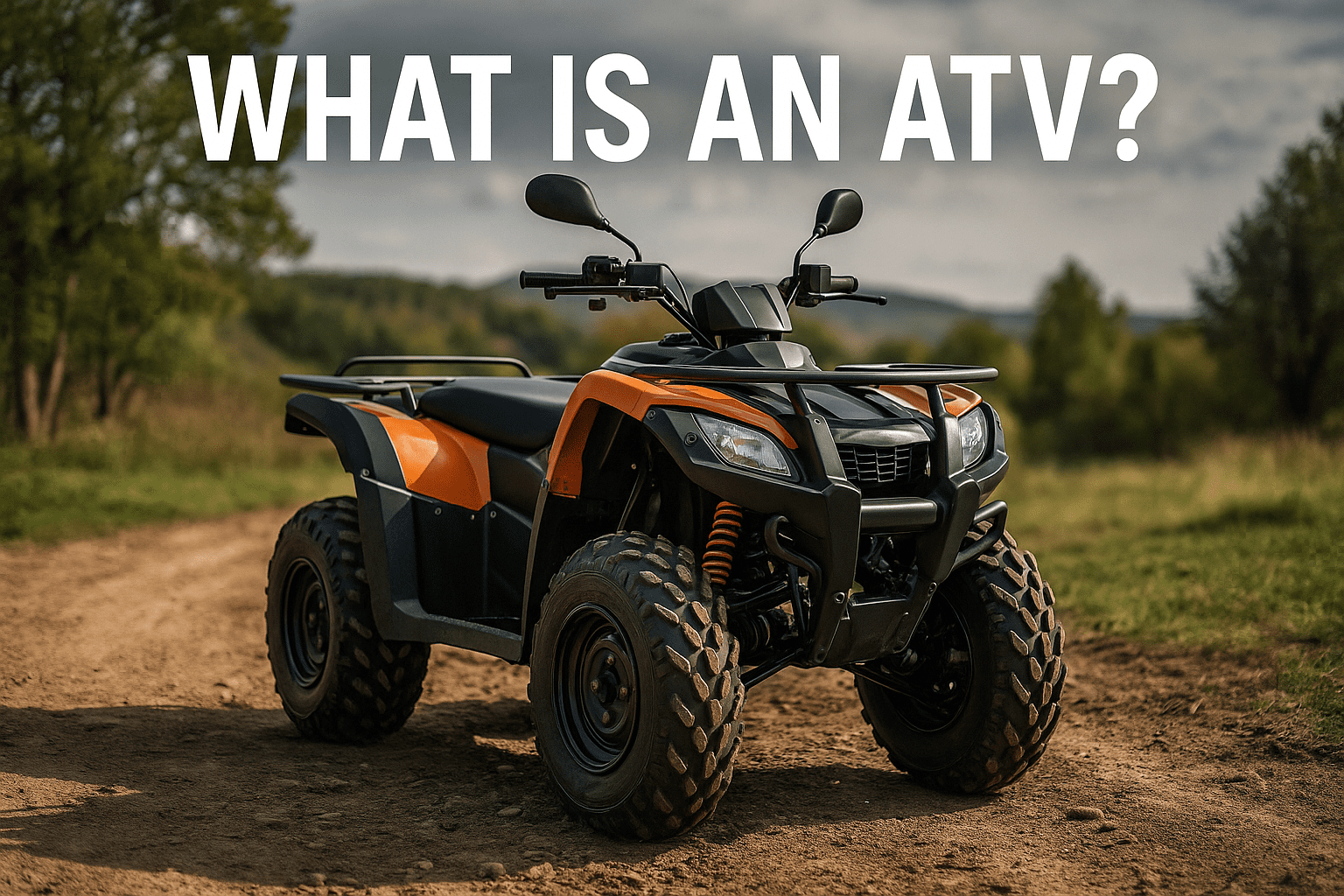
What is an ATV?
An ATV stands for All-Terrain Vehicle, a small motorized vehicle with four wheels designed for use on rough terrain. An ATV vehicle is used for recreation, farming, forestry, hunting, and even military purposes because it can operate on mud, sand, dirt, and snow.
Different regions use different names for the same vehicle. In Europe, the common term is quad or quad bike, while in North America, the terms four wheeler and 4 wheeler are widely used. All of these names refer to the same type of off-road vehicle.
A major variation is the side by side ATV, often called SxS, which has two or more seats placed next to each other instead of one rider straddling the machine. Side by side ATVs use a steering wheel instead of handlebars and typically include roll cages and seat belts for safety.
Together, the terms ATV, quad, quad bike, four wheeler, 4 wheeler, and side by side ATV describe vehicles designed to carry riders and equipment over difficult terrain where ordinary cars or trucks cannot operate.

Understanding the Term ATV
An ATV, short for All-Terrain Vehicle, is a versatile off-road vehicle designed to handle various types of rugged terrain. These vehicles are essential for recreational activities, work on farms or construction sites, and even military tasks. They can travel across mud, sand, snow, or gravel, making them ideal for areas where regular vehicles can’t go.
What Does ATV Stand For?
ATV stands for All-Terrain Vehicle, which highlights its capability to operate on various types of ground, such as dirt, mud, snow, and even sand. The “All-Terrain” part of the name emphasizes the vehicle’s ability to tackle rough and unpaved surfaces, which is why it’s a popular choice for off-road adventures and work in rural areas.
What Does ATV Mean?
An ATV means a motorized vehicle designed for off-road use. It’s typically equipped with four large wheels and is capable of handling a variety of difficult surfaces. It is commonly used in both recreational activities, like trail riding, and practical tasks, such as farming or forestry. The ATV’s ability to traverse rough terrain while offering a stable ride makes it a key vehicle in many industries.
Key Features of an ATV
When thinking about what an ATV vehicle really means, it’s important to consider its main features. These vehicles typically have four wheels, although there are also models with three or even six wheels. They are powered by engines that can range from small, 50cc engines for young riders to large 700cc or more engines for sport and utility versions. ATVs also have large, knobby tires for better traction on rough ground and a low center of gravity to keep them stable while riding.
Different Types of ATVs
There are various types of ATVs, each designed for different purposes. Sport ATVs are built for high speeds and agility, perfect for racing or trail riding. Utility ATVs are heavier, with larger engines, and are equipped with racks and towing capabilities, making them ideal for farming, construction, and even rescue missions. Finally, Youth ATVs are smaller, have reduced engine power, and are designed to provide a safer, slower ride for beginners.
ATV Synonyms and Regional Names
When it comes to ATVs, there are several different names people use to refer to the same or similar vehicles. Understanding these terms can help clear up any confusion, especially when you come across them in different regions or industries.
What is a Quad?
A Quad is simply another name for an ATV, and it’s commonly used in many places around the world. The term “quad” comes from the word “quadracycle,” which refers to a vehicle with four wheels. In everyday usage, people often use the term quad when talking about recreational off-road vehicles. While it’s used across many countries, it’s especially popular in areas like Australia and parts of Europe.
What is a Quad Bike?
The term quad bike is commonly used in the UK and Europe to refer to what is essentially an ATV. However, the quad bike is often more closely associated with vehicles that are legally allowed to be used on roads, particularly in European countries. In the U.S., quad bikes are usually off-road only, while in the UK, some models can be street-legal. So, while the quad bike is technically the same as an ATV, it’s the road-use aspect that distinguishes it in some regions.
What is a Four Wheeler?
The term four wheeler is the most widely used term for ATVs in North America. It refers to the same off-road vehicle, but the term “four wheeler” has become the go-to word for consumers in the U.S. and Canada. Though it can technically mean any vehicle with four wheels, when people talk about a “four wheeler” in the context of outdoor activities, they’re generally referring to an ATV designed for off-road use.
What is a 4 Wheeler and How Does it Overlap with ATV?
A 4 wheeler is another common term for an ATV, particularly in North America. It’s used interchangeably with the term ATV and is sometimes more familiar to the general public. While it’s synonymous with ATV, 4 wheeler is more of a consumer-friendly, everyday term, especially in areas where off-roading is a popular activity. In this sense, it overlaps completely with ATV in terms of usage but lacks the technical formality that “ATV” carries.
Types of ATVs
ATVs come in different forms, each designed for specific uses. The standard version is the single-rider machine, while another popular variation is the side by side ATV, often called an SxS. Understanding the differences between these types helps explain why they are used in such a wide range of environments.
What is a Side by Side ATV?
A side by side ATV is a larger off-road vehicle designed with two or more seats placed next to each other, rather than a single straddle seat. Unlike traditional ATVs that are controlled with handlebars, a side by side uses a steering wheel, which gives it more of a small-vehicle feel. Most models also include seat belts, roll cages, and stronger suspension systems for extra safety and comfort. The seating style and design make them suitable for carrying passengers, tools, or equipment over tough terrain.
Differences Between Single-Rider ATVs and Side by Side ATVs
There are several key differences between a single-rider ATV and a side by side ATV. A single-rider ATV is smaller, lighter, and designed for one person, making it more agile for trail riding and sport use. In contrast, a side by side ATV is larger, heavier, and often built to carry two to six passengers. Side by sides are also better for hauling or towing, while single-rider ATVs are more focused on speed and maneuverability.
How Side by Side ATVs Are Used
Side by side ATVs are widely used in work, rescue, and sport settings. On farms, they help transport supplies, pull trailers, or carry tools across uneven ground. In emergency rescue situations, they are used to reach areas that regular vehicles cannot access, such as forests or mountains. In sports, side by side ATVs are part of competitive racing and off-road events, where their stability and safety features are highly valued.
Key Takeaways on ATVs, Quads, and Four Wheelers
All of the terms — ATV, quad, quad bike, four wheeler, 4 wheeler, and side by side ATV — describe the same family of off-road vehicles. The different names come from regional preferences or design variations, but they all connect back to the idea of a small, motorized vehicle built for rough terrain.
Across the world, these vehicles are used for both recreation and work. Trail riding, hunting, and sport competitions highlight the recreational side, while farming, forestry, construction, and rescue operations show their practical value. With their popularity comes the concern of safety, as thousands of injuries are reported each year due to lack of training, helmet use, or proper supervision for youth riders. Organizations like the ATV Safety Institute provide structured guidelines to reduce risks.
The ATV market continues to expand, with leading manufacturers such as Honda, Polaris, Yamaha, and Can-Am producing both traditional single-rider ATVs and advanced side by side ATVs. Global forecasts show steady growth, driven by demand in agriculture, outdoor recreation, and specialized industries. As technology develops, improvements in suspension, safety features, and performance continue to shape the future of ATVs worldwide.

